
State of Play – Investment Options – Crypto and the Wider Markets


There’s a bit of confusion about how some basic crypto market details have looked this year.
I was having a chat during the week with one of the people I met at the Australian Crypto Convention and I said to them that I feel this is the most Bearish Bull Market I have seen and that the last Bear market was the most Bullish bear market I had seen and I have previously written about this and commented on it in other blog posts.
Bear markets are usually defined as periods when a market is down by at least 30% from a recent high. With that benchmark in mind, over the last couple of months, a popular story has emerged, claiming that the crypto sector’s bull market ended back in January, and that the majority of 2025 has been one long bear market for the entire sector.
The story feels true because crypto portfolios are hurting right now. Lead assets like Bitcoin (BTC), Ethereum (ETH), Solana (SOL), XRP (XRP), Cardano (ADA), and even Dogecoin (Doge) have spent the year generally grinding lower while the stock market roared higher, led by the “Magnificent Seven” group of stocks and the Ai boom. So, is 2025 a bear market for crypto or not, and what should you actually do about it if it is?
It certainly feels as though the crypto market is changing and the 4 year cycle appears to be shifting slightly. While I feel that the 4 years cycle will still bear an impact on many of the coins and certainly the various PoW coins with halvings (or similar halving type set ups), I think that we will see an ever growing impact from other external factors that also bear weight on the state of play for the crypto market but more of that later.
What 2025’s drawdown actually looks like
Let’s begin by looking at crypto as a whole rather than any single coin.
The global crypto market cap was around $3.8 trillion in mid-January before sliding sharply into the spring. It then recovered to reach a high of $4.3 trillion in early October, only to be devastated by the flash crash early in the month and now rests at about $3.2 trillion.
Today’s $3.2 trillion level represents something like a 16% slide from the start of the year, and roughly a 23% drop from the October peak. In stock market terms, that does indeed put the whole crypto sector somewhere between a sharp correction and the potential start of a bear market.
But at the individual coin level, it feels far worse than what that implies. With some coins down by extreme levels and other projects absolutely capitulating.
Let’s take a look at this chart for the period Jan 25 to Nov 25:
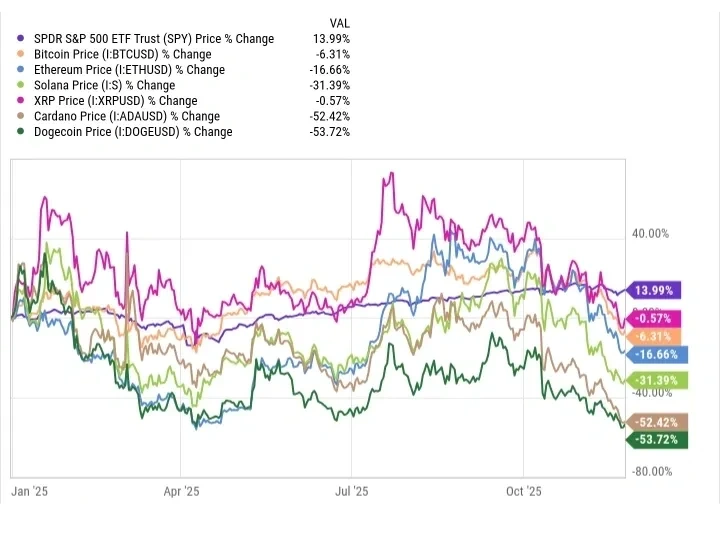
As you can see, Bitcoin’s performance has been disappointing to most people. Ethereum is in the doldrums again after briefly showing signs of momentum. And Solana slumped despite a significant inflow of tokenized real-world assets (RWAs) to its chain.
In contrast, the stock market is up about 16% in 2025, even after the tariff-driven sell-off earlier in the year, and even amid substantial uncertainty in the economy. When you hold coins that are down double digits while the stock index funds are green, it certainly kind of feels like a crypto bear market. But while it may feel like a bear market has sprung us it’s not a bear market just yet.

From here, there are two scenarios to consider.
The First Scenario – this year’s drawdown so far is simply a reset within a larger uptrend. In this world, the sharp October slide and the recent $1 trillion wipeout in crypto market cap value are painful but ultimately temporary, and not the start of a multiyear decline. If that’s correct, continuing to accumulate high-quality coins is likely to yield favorable results over a longer time horizon. Also, picking up additional hashrate and adding miners to your crypto mining stable right now while prices are down can also be a wise investment for miners.

In the second scenario – the real bear market is still ahead. Crypto has just experienced a period of new exchange-traded funds (ETFs) and supportive policy moves for the first time. Without such catalysts to look forward to, investors could withdraw their capital and redirect it to greener pastures elsewhere. If this scenario proves to be true, the market will be well on its way to the depths of market conditions and I suspect Bitcoin could fall by as much as around 60% from its market cycle top, with some altcoins expected to decline by 80-90% of their market cycle top.
If the ongoing downturn attenuates into mere doldrums over the next month or so, it suggests that the first scenario is true. The best approach is to continue to dollar-cost average into Bitcoin and Ethereum as well as coins such as Litecoin, Solana, Chainlink and XRP, as their recovery is likely to be around the corner and they have proven themselves over time and multiple market cycles. Privacy coins such as Monero, Dash and Z Cash have also seen renewed favor and a DCA strategy for those may also serve well over time (you can also Mine these coins). It might also be advisable to pick up some other altcoins on deep discounts such as Doge and Hbar or Stellar, then other coins in the meme space if your risk tolerance is high enough for it.
We have already seen some recovery over the past week and there is hope that 2026 will see another run and some significant price appreciation of many key assets (as well as some potential for other one hit wonders) but if this scenario is to play out then it will most likely be a short and sharp acceleration before the market turns bearish and then the slow grind continues again toward the next cycle.
On the other hand if the sell-off accelerates or proves to be durable, the second scenario is more likely. Here, taking on risk too quickly with crypto majors or dabbling in altcoin investments is practically guaranteed to be deadly for your portfolio. The right approach is to become far more selective and cautious with your buying activity, and to concentrate your purchasing in proven assets like Bitcoin, Ethereum and maybe others like XRP, LINK and Litecoin which will be more inclined to survive the bear market in some form no matter how rough it gets.
Either way, understand that low prices will not be around for all crypto assets forever, and if you’re going to be in the market for at least the next five years or more, it’s a better idea to be buying than to be sidelined or stagnant, even if it feels scary to see prices falling. Bear markets often seem like they’re the worst time to be looking for opportunity, but the truth is that opportunity is always there if you’re willing to plan ahead. This is also true of crypto mining, the best times to add hashrate are when the market pulls back, we have seen this time and time again. Set yourself during major pullbacks and bear markets and reap the rewards when the market trends back up.
Lark sums it up very well here…
So, what about shares?
There are many investment options so lets also take quick look at shares. It’s true, we have seen some super frothy action (but it has not simply been plain sailing), there have been some large pullbacks through this year, and it has been beneficial to keep a more active eye on your investments to capitalize on this, tale profits and buy those dips.
We are navigating some tricky times and it is not easy, we are also seeing a new emergence in AI and Data centres being the flavor of the time and we are seeing some shaky ground in some of the mining stocks. There are some undervalued stocks currently sitting there and these could be the opportunities to buy up and build on for a diversified portfolio.
If there’s one investing principal Warren Buffett has repeated more than any other, it is to buy wonderful companies at fair or undervalued prices. Not speculative names. Not the hottest trend. Just proven businesses that are temporarily trading below what they are truly worth.
It is a simple philosophy, but it is also one of the main reasons the Oracle of Omaha has outperformed the broader stock market for more than half a century, and it remains just as relevant today.
Even after the recent rebound in global markets, pockets of undervaluation still exist. And for long-term investors, these opportunities may be far more attractive than trying to chase whatever is surging right now.
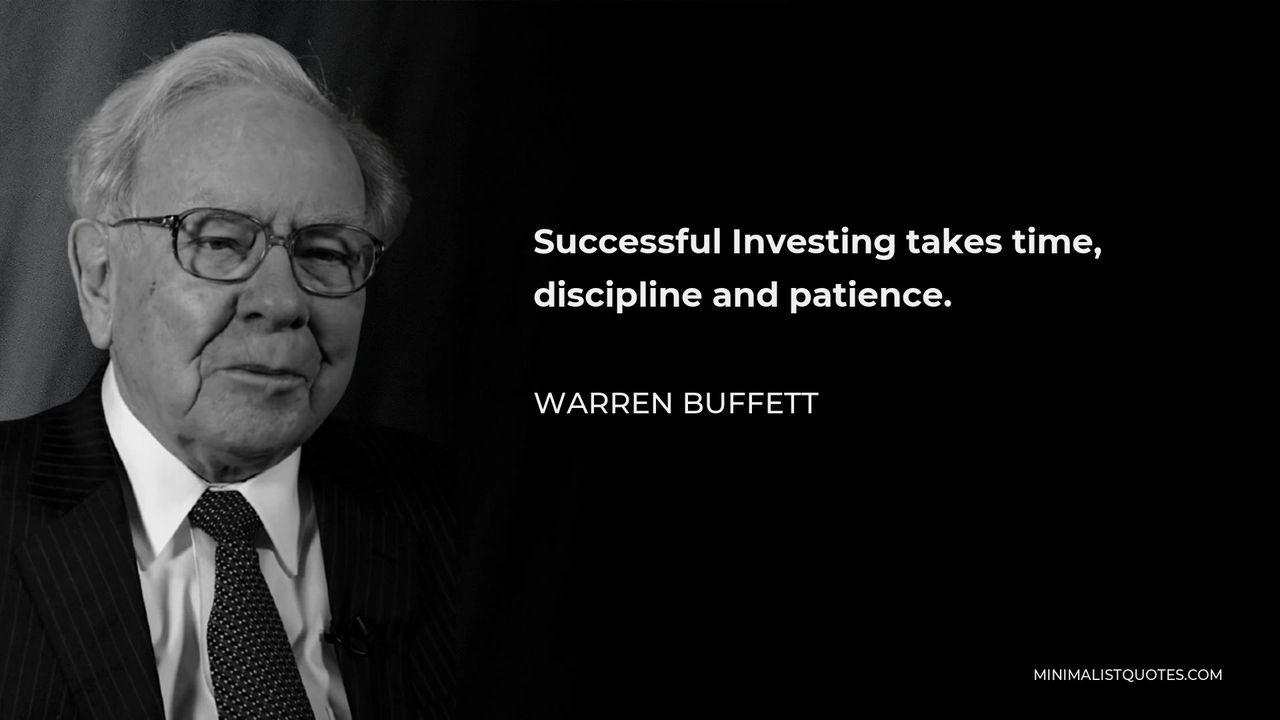
Warren Buffett doesn’t hunt for cheap shares
Buffett has always made it clear that undervalued shares aren’t the same as good value shares. A stock can look cheap on paper but still be a bad investment if the underlying business is deteriorating.
What Buffett actually looks for is value relative to quality, strong competitive advantages, durable earnings, talent management, and long-term tailwinds.
If a company ticks those boxes and the market is mispricing it due to short-term pessimism, that is when Buffett becomes interested.
This mindset has delivered decade after decade of outperformance, not through luck, but because buying undervalued high-quality businesses creates a natural margin of safety and amplifies long-term returns.
Powerful in uncertain markets
A common mistake that investors make is waiting for the perfect moment to buy ASX shares. Buffett doesn’t try to predict market tops or bottoms; he simply focuses on value.
And when markets wobble, sentiment weakens, or headlines turn negative, that’s when mispricing often occurs.
Today’s environment is a perfect example. There are plenty of high-quality ASX shares that trade well below their long-term averages. Think of companies such as CSL Ltd (ASX: CSL), which remains deeply discounted despite strong fundamentals, or Xero Ltd (ASX: XRO), which has been sold off far more than its long-term growth outlook deserves.
These situations don’t guarantee gains. No investment does. But what they offer is a level of valuation support that speculative, overhyped sectors simply cannot match. I am definitely watching these shares amongst others for the possibility of adding holdings over time while prices are down.
Buffett’s point is simple: if you buy into a high-quality business at a sensible price, you are already ahead, no matter what the market does next. I’ve said it before, if you value a company and believe that it has the staying power over the long term then buying it when the price pulls back sharply is great (provided that the reason for the pullback is not due to poor management of the company or another factor that will see the company undone in the near future). Buying these when on sale is a great way to DCA and lower your overall buy in price and assist in seeing a greater compoud effect as the shares recover. Think of it like buying your favorite jeans or sneakers while on sale, it’s a great opportunity – you know they are good quality and they have given you proven performance over time so why not add a few more pairs to your wardrobe while on sale!
Warren Buffett’s advice hasn’t changed in 60 years because it keeps working. Buy great businesses when they are good value, hold them for as long as you can, and let compounding do the rest. I greatly respect what he has achieved over a long period of time – but I still think he missed the boat on BTC.
Even with traditional markets rebounding recently, there are plenty of high-quality ASX shares that still trade below what they’re worth. For long-term investors, this may be the ideal moment to follow Buffett’s lead.
All of this leads me to the point below
Investing is a Necessity!
Investing is no longer optional to get ahead – it is a necessity; I have been saying things like this for some time now and when I was at the AusCryptoCon in Sydney last weekend I went to a session of a friend of mine from Coinstash – Ting Wang. It is critical to invest and to invest wisely and to ensure that your investments are growing ahead of inflation – otherwise you are going backwards. Each year our dollar buys us less so the only way forward over time is smart investing to grow your investments.
Ting Wang is the Co-Founder & CEO of Coinstash
He is an Investor in the following:
Bitcoin
Property
Gold
International equities
Australian equities
Startups
He spoke about some of the following, and it resonated with me as to some degree I have been making the same points for years:
The Income illusion.
The median Aussie household income in 2020 was $170K AUD and in 2025 is $200K AUD – that is an increase of 17.6%
That may sound great but when you break down the figures it doesn’t look too good. Our money is buying us less due to inflation.
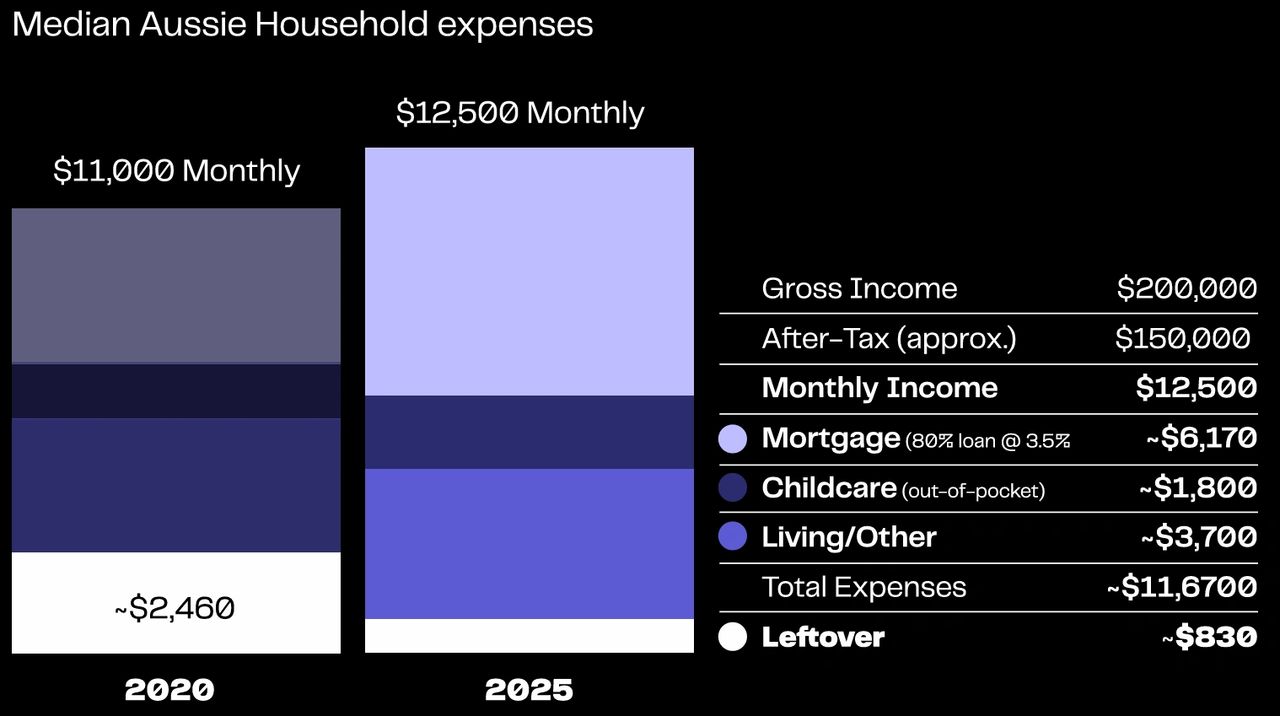
In just five years, real disposable income has fallen by two-thirds. Not because we earn less, but because our money buys us less.
Inflation is not transitory.
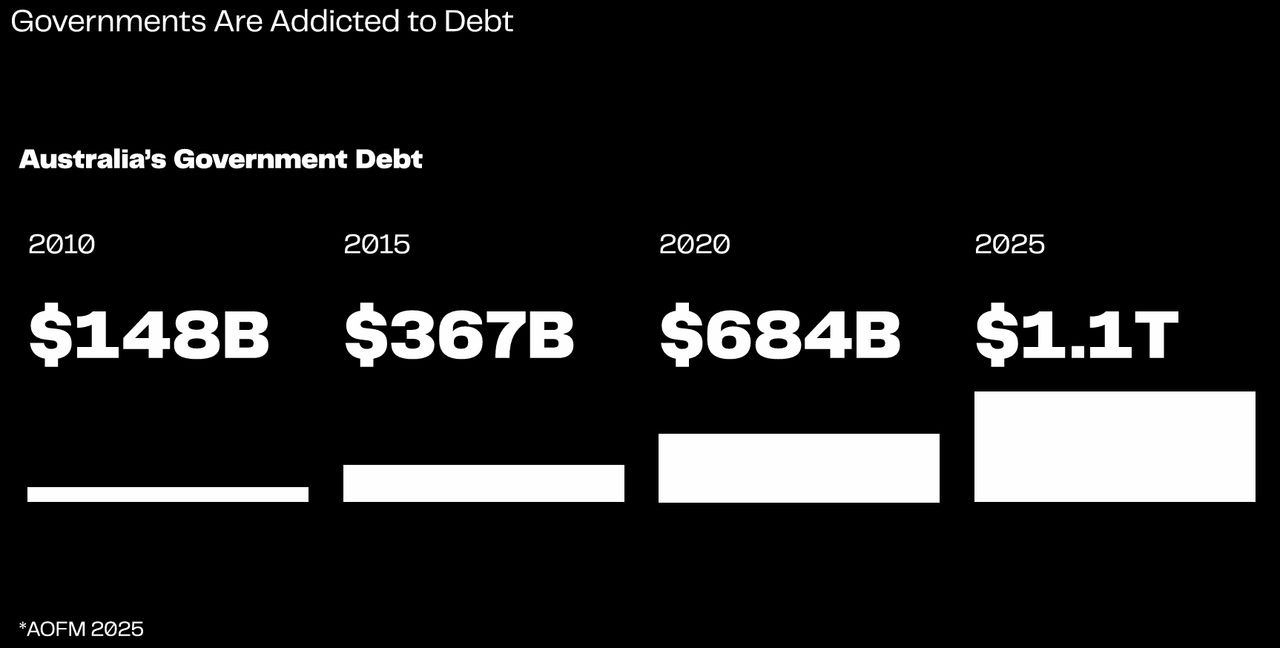
Australia has been increasing its national debt by double every 5 years since 2010 as the image above depicts. Over the past 4 months our Labor/Greens government has increased our budget deficit from $10 Billion to $32.9 Billion that is over 2/3rd increase in a mere 4 months! An almost $23 Billion increase in just 4 months….. and people wonder why we have an inflation problem…… This highlights just how poorly the current government handle the finances. If this goes unchecked over the remainder of their term just how high will the national debt be by mid 2028 when our next national election is due and then where will it be 5 years from now if it is left unchecked?
A Self-Fulfilling Prophecy
When businesses and workers anticipate inflation, they adjust prices and wages proactively. This behaviour itself pushes inflation higher, turning expectation into reality. Everyone always wants more, businesses want more profits, better results against KPI’s and better results for shareholders. Individuals always want more, more handouts, higher wages, lower taxes and more benefits.
The problem is that you can only get so much juice out of an orange, sure there may be better tech to gain more juice and less waste by using a particular device. But once all that juice, all that moisture is extracted then there is no more.
So, where do we get more juice? The wise way would be to plant more orange trees and build up more reserves over a period of time, forecast demand and supply accordingly, factoring in environmental conditions and allowing a certain amount for what I like to call “fudge factor”, basically anything that could cause a loss of production. But our current government doesn’t work like that (and there are not many governments that do). They fail to forecast accurately, fail to factor in any “fudge factor” and will just print more money as required, build up more debt and flood the market prematurely with more and more juice because they have failed to account for all factors rather than building wisely and managing the economy in a sustainable way.
Official inflation figures may be understated
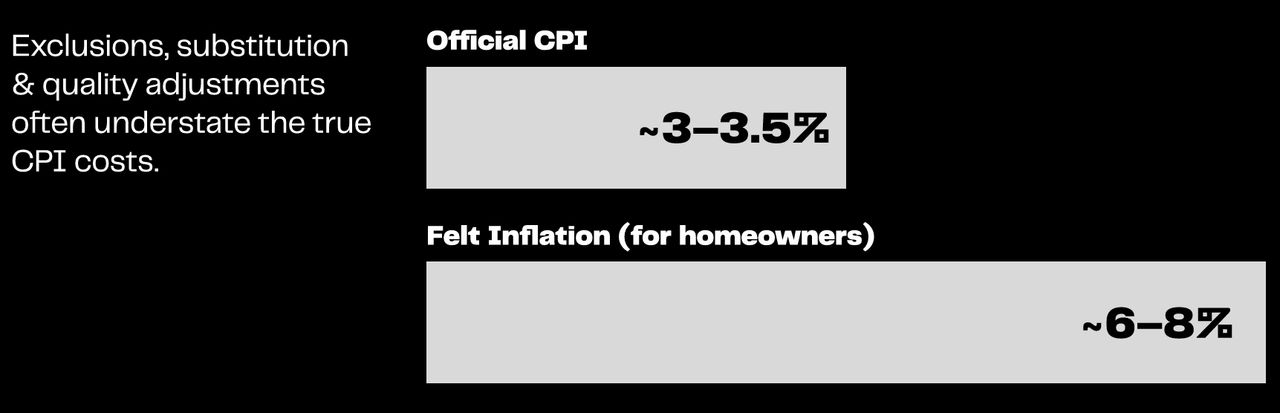
Over the past 5 years the Aussie dollar has lost around 20% of its buying power!

When you couple these figures with the bracket creep problem in our tax system your dollar gets squeezed even more. Our current tax system needs urgent reform as static tax rates and thresholds gradually pull more people into higher tax brackets – so as inflation increases your salary you slide further towards the next bracket up where you pay more tax. It may sound great earning more money but along with that you will then pay more tax (and not only that you will get less of a discount on your health insurance as your wages crosses certain thresholds).
Watch the following video to understand more
Bracket Creep Explained: The hidden tax cutting into your earnings | Emilie Dye
Centre for Independent Studies
The system is designed to keep you poor and prevent too many people growing wealth and independence.
Investing is no longer optional – it is a necessity!
So, where should you invest?
There are multiple choices to consider for your investments, and each person will have a different strategy to suit their appetite of risk. No one single strategy is best for everyone and at each stage of life that strategy is likely (and should) change.
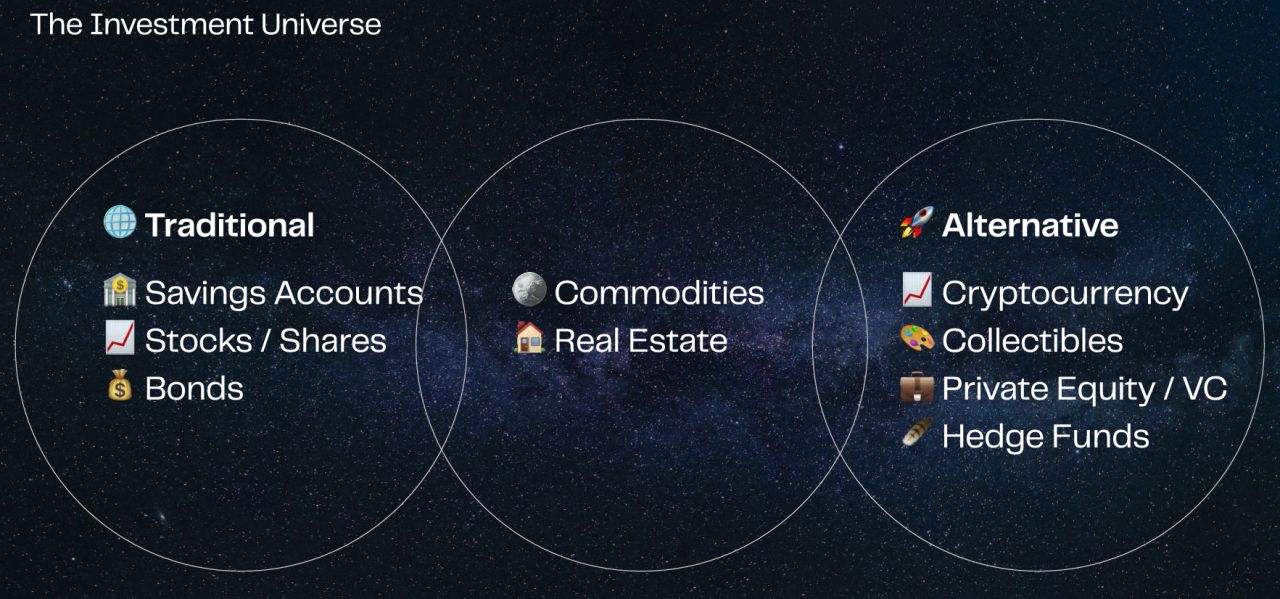
Where do Bitcoin and Crypto investments fit within the investment universe?
As we see more of the traditional financial landscape filter in to crypto and crypto filter more into traditional markets there is somewhat a blurring of the lines. Many would say crypto sits in the alternative category, while others say all crypto except Bitcoin fit into the alternative category and Bitcoin fits in the commodities sphere, but then others will say Bitcoin and some other crypto now fits within the traditional sphere… There is an increasing blending as we see more mass adoption and hybrid products such as Bitcoin ETF’s enter the market.
What strategy is right?
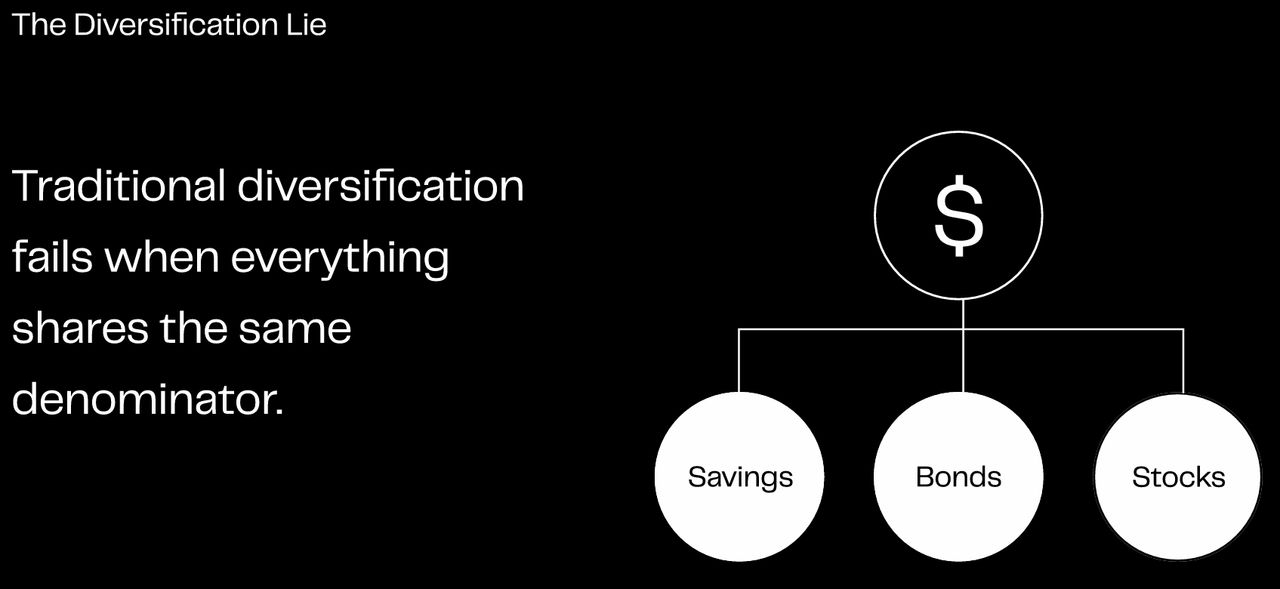
Diversification tends to work best, but traditional diversification fails when everybody follows the same denominator. “Every asset feels expensive because the denominator, money, is broken” Lyn Alden, Investment Strategist & Author
The case for Bitcoin and Crypto
With everything dependent on the dollar as the same denominator you can find traditional diversification can fail. Where Bitcoin differs is that it works against inflation to ensure that over time your Bitcoin holdings are worth more whereas your cash holdings are worth less, your bitcoin buys you more with less over time and your cash always buys you less. The chart below provides a great illustration.
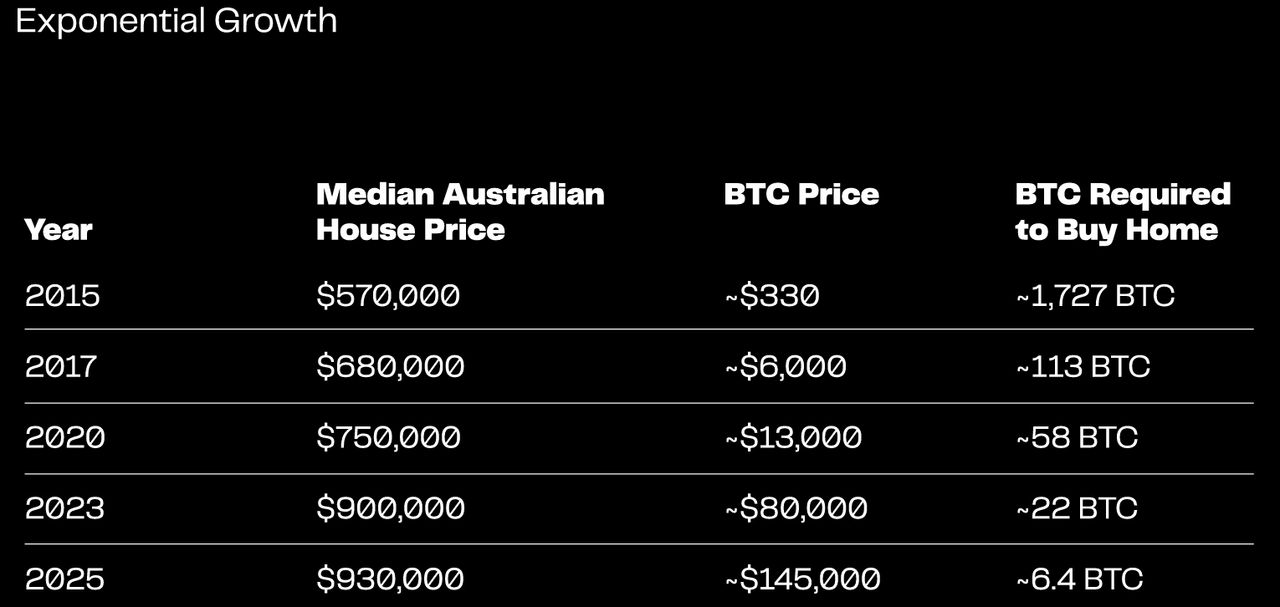
In just 10 years we have seen house prices pretty much double but the quantity of BTC required to buy houses has decreased massively. buying approximately $1M AUD in houses in 2015 would have cost you around over 3400 BTC wheras in 2025 that same $1M AUD value is merely around 6.4 BTC.
3400 BTC in 2025 would buy you around 531 $1M AUD houses and in contrast your dollar has significantly dwindled. This is the case for diversification from more traditional assets towards Bitcoin and crypto.
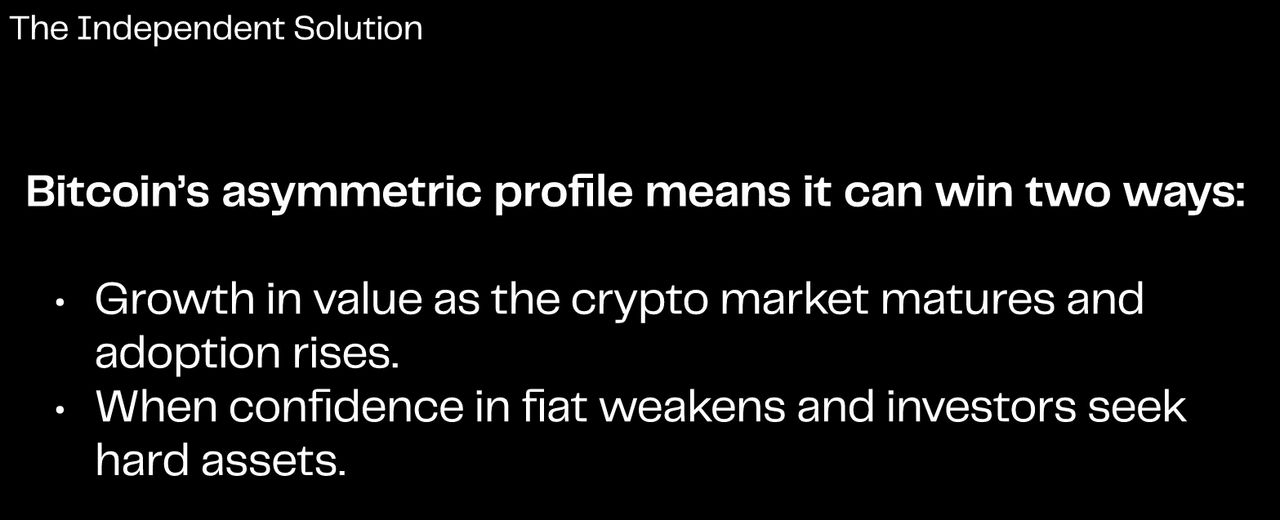
We are still fairly early, Institutional Adoption is Not Yet Mainstream even though a few big firms like BlackRock and Fidelity are now in the game, mainstream fund managers (especially long-term institutions like pension/super funds) are not yet on board.
For the first time in history, ordinary investors can front-run the next monetary era, not be trapped by it.
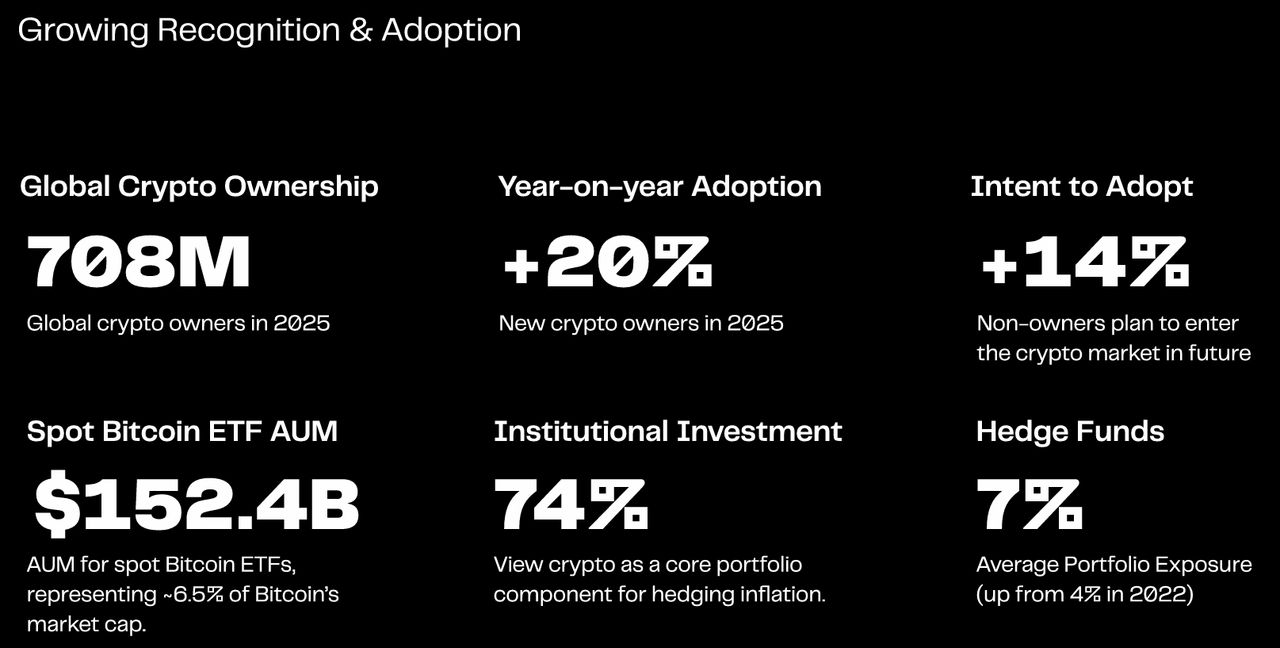
There is growing recognition and adoption – 1 in 3 Aussies have owned crypto; awareness exceeds 95% Nationwide. Australian Crypto SMF holdings climbed from $1.7B AUD in 2023 to $3.1B AUD in 2024. Momentum is building but it is not completely mainstream yet.
Bitcoin has a pretty impressive record
- 16 Year flawless track record
- A neutral, mathematically enforced monetary network with no competition
- Adoption rates comparable to Facebook, Amazon or Tik Tok
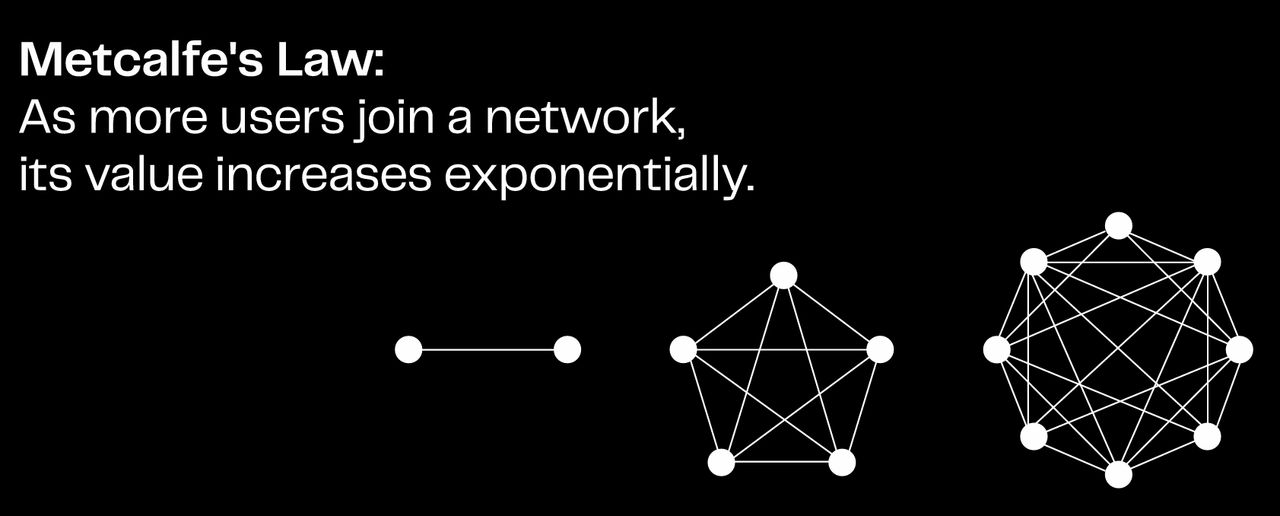
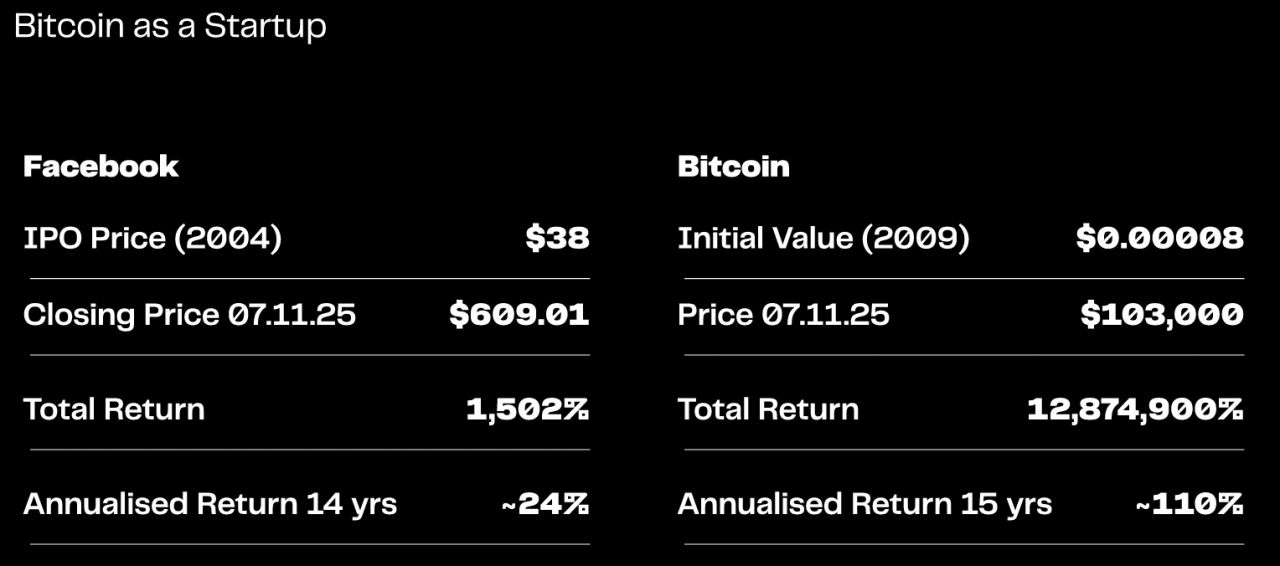
When we view Bitcoin as a start up and compare it to Facebook (Meta) the numbers are astounding.
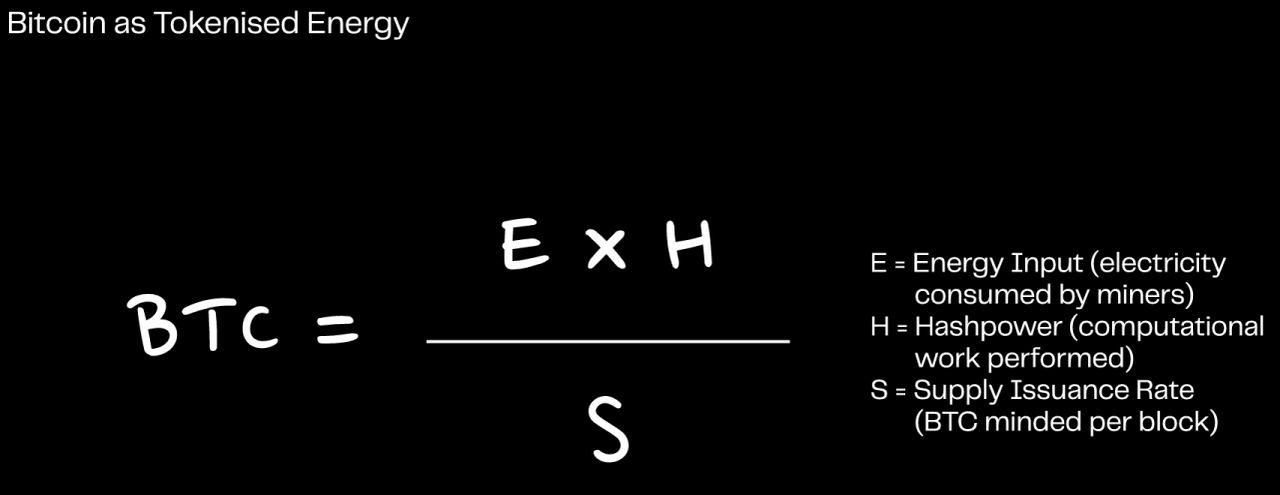
Every mined Bitcoin is backed by real-world energy expenditure, giving it intrinsic, measurable cost and scarcity. This makes Bitcoin the first digital commodity truly tied to real-world thermodynamics, not just human trust. This is also true of others such as Litecoin, Dash, Z Cash, Ethereum Classic, Kaspa and other proof of work (mineable coins) with a hard fixed cap on coin production or supply.
Gold Vs Bitcoin
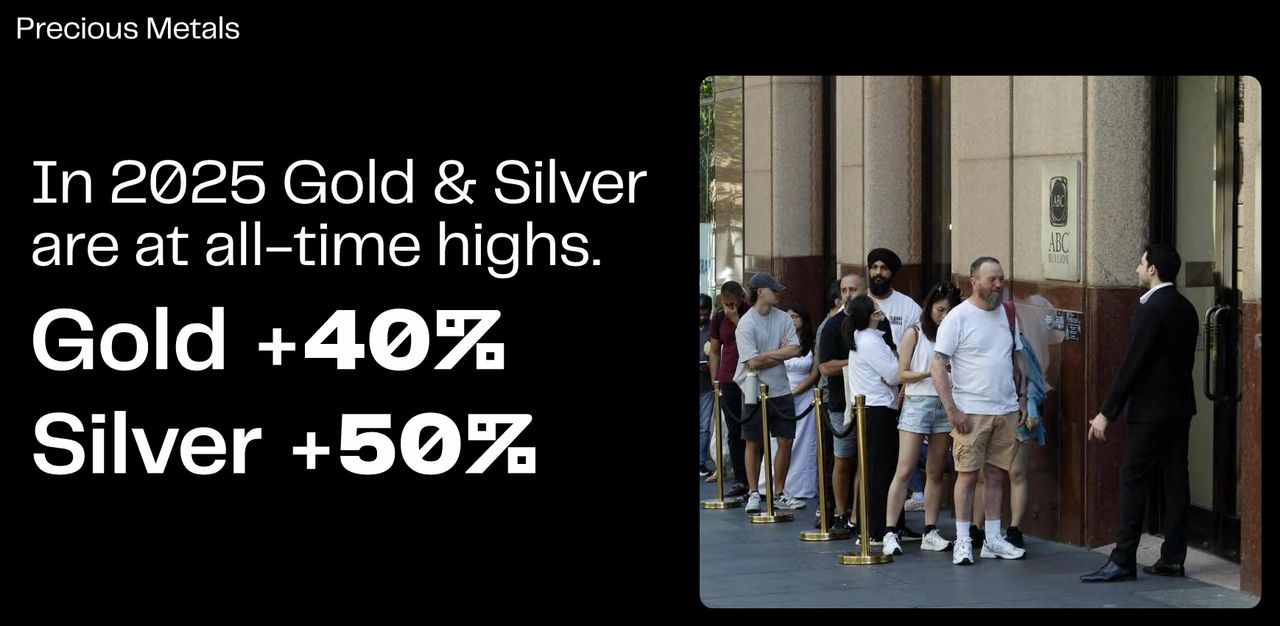
While I do like gold and understand it’s place in the economic landscape these two assets are similar yet different. Precious metals have seen a huge return on investment in recent times.
Gold – Bound by chemistry: it must be mined and refined.
Gold’s identity and value are rooted in atomic structure and chemical behaviour.
Bitcoin – Bound by physics: energy + time + computation create digital scarcity.
Bitcoin’s scarcity and security are rooted in physical energy and computational limits – via the digital mining process and nature of the blockchain.
Bitcoin performance since inception.
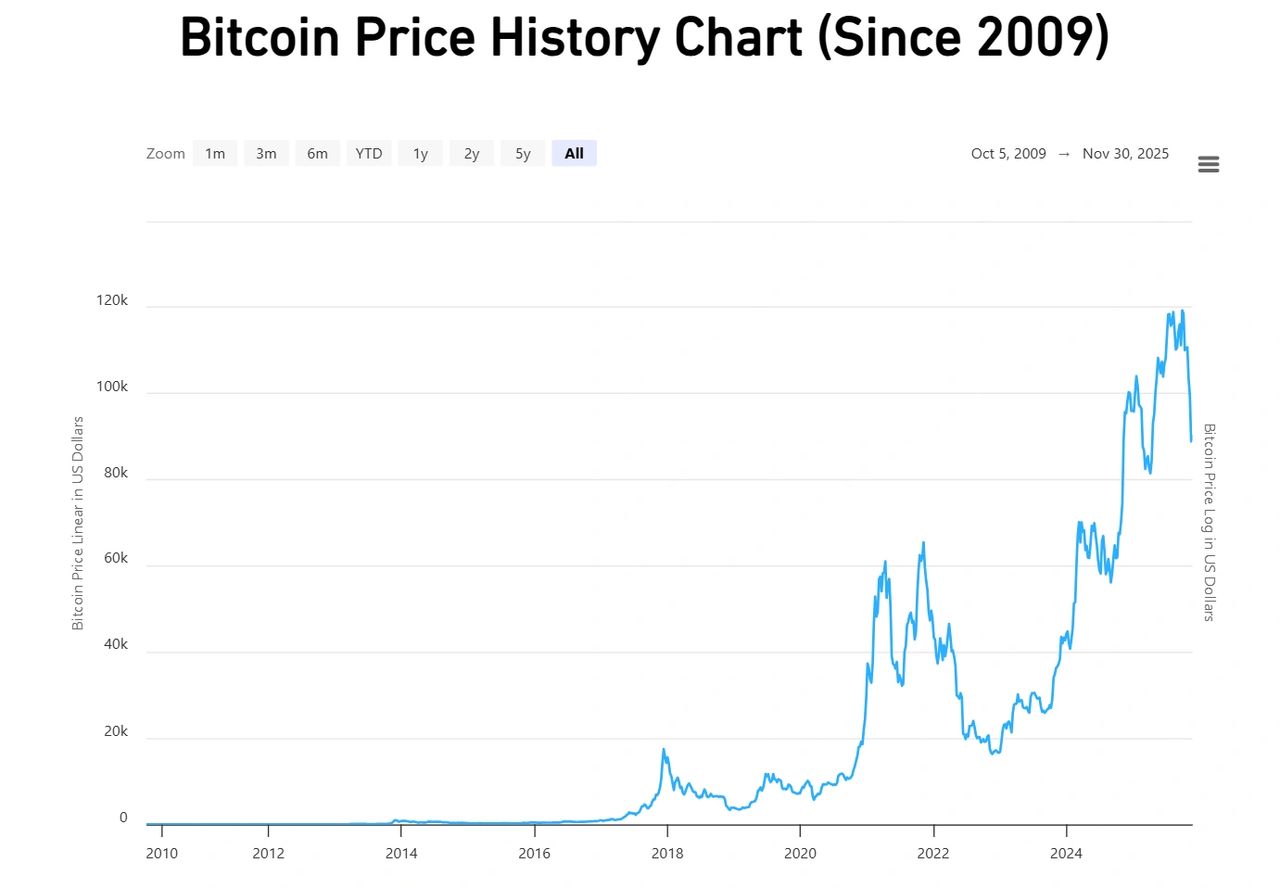
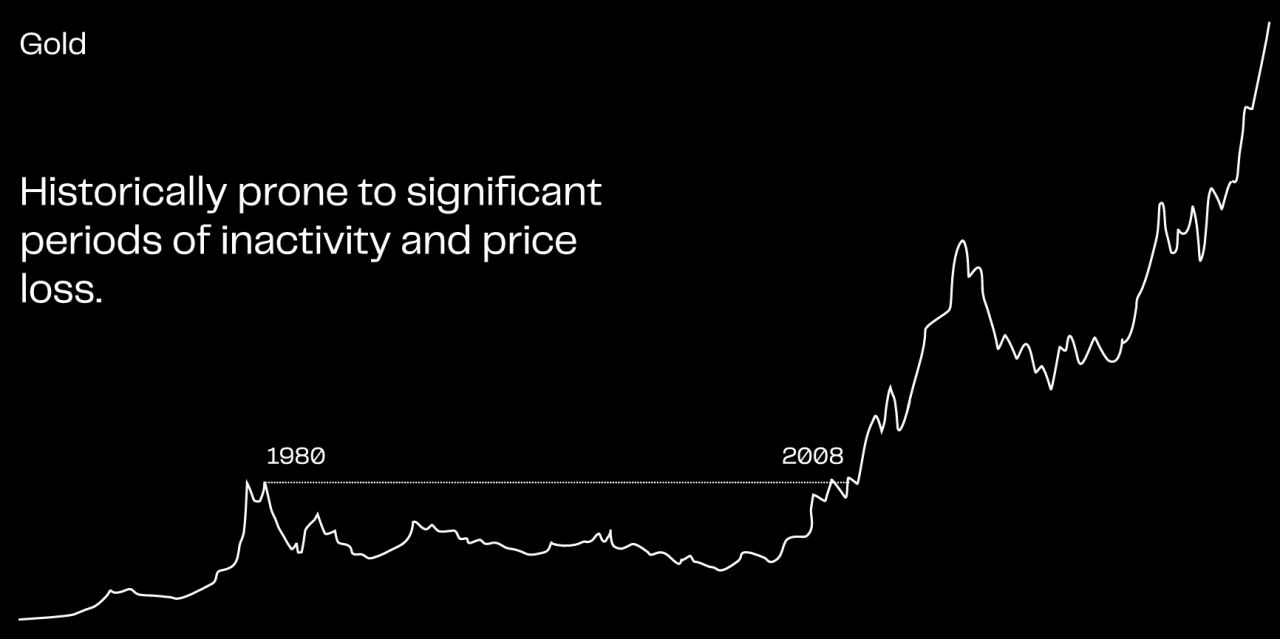
Bitcoin had a fairly dormant period between 2009 and 2016, however, its chart from 2016 to today (even with the current pullback) is impressive. There are no real prolonged periods of dormancy or price regression. Golds chart since 2008 has been similarly impressive and we can definitely see a shift in society towards these assets.
There is certainly a case for both of these assets in a well-balanced portfolio.
“Australia is a wealthy nation, blessed with natural resources and built through hard work and modern industrialization. As our anthem says, we’ve golden soil and wealth for toil. Now it’s time to protect that wealth. Investing is no longer optional — it’s essential.”
Ting Wang, Coinstash
Bitcoin is just the beginning. The crypto ecosystem is exploding with new technologies, new projects, and new investment opportunities. The time is now to embrace that, invest wisely, mine wisely and dedicate to a plan that will assist you to grow your wealth.
Happy Mining
Rusty Rigs
Ask us about Pre Orders for the New L11 Scrypt Miners available early 2026

Disclaimer: The content on this site and in this communication should not be considered investment or financial advice. Any investing or crypto mining is speculative. When investing your capital is at risk, please do your own research and invest and make your decisions wisely. Mining profits are not guaranteed and may vary over time depending on the market performance and network hashrates. The views and opinions expressed by the author are for informational purposes only and do not constitute financial, investment, or other advice.