
Energy – Renewables & Blockchain

From the ICO boom in 2017 to the “DeFi Summer” of 2020, then in 2022/23 the focus was more on Web 3. Now, as we prepare for the next crypto Bull Run, excitement is building with AI and TradFi both set to transform this industry. New crypto tech, new consensus mechanisms, more privacy, scaleability, faster process and transaction speeds and a more cohesive blockchain are essentially what developers need and are looking for. Tech plays a huge part in driving crypto forward, tech never sleeps but without energy there would be no blockchain……. Let’s take a look….. But first…..
Happy Bitcoin Pizza Day 2024

Bitcoin Pizza Day is celebrated every year on May 22 to commemorate Laszlo Hanyecz’s historic transaction. On this day, bitcoin enthusiasts across the globe take time to celebrate the early days of cryptocurrency and use the day as a reminder of how far the OG coin has come.
Laszlo Hanyecz (The Bitcoin Pizza Guy) spent 10,000 Bitcoin to purchase two Papa John’s pizzas on May 22, 2010. Since Papa John’s didn’t accept Bitcoin as payment, he posted a 10,000 Bitcoin offer on Bitcointalk.org and Jeremy Sturdivant, a 19-year old then, took the offer for an estimated $41, bought the two pizzas and delivered.
Today, the Bitcoin community worldwide commemorates May 22 as the first recorded day that Bitcoin was used to purchase a physical good. The community celebrates by buying two pizzas and sharing them. Certain pizza restaurants also contribute to the celebration by offering discounts to customers who pay in Bitcoin.
“To me, the day that I was able to buy food with bitcoin, it made it real to me,” Laslzo said in an interview.
Laszlo took a family photo after the delivery marking perhaps one of the biggest milestones in the Bitcoin story. It is viewed as the first ever real-world Bitcoin transaction. And amazingly over the course of 2010, Mr Hanyecz, who is now 33 (although other records say 39), estimates he spent 100,000 Bitcoin, or a current equivalent of AUD $10,305,709,580 on pizzas alone. And as of Tuesday those 10,000 Bitcoins that he paid Mr Sturdivant would have been worth a stunning $1,030,570,958 AUD
“The bitcoin went into a wallet that was later liquidated to cover expenses while travelling the US with my girlfriend at the time,” , Jeremy Sturdivant mentioned.
Read more here The True Story Of Laszlo Hanyecz (a.k.a The Bitcoin Pizza Guy) | by Pantera | The Crypto Kiosk | Medium

Now back to the Blog…Hungry after all those Pizza images…Maybe get your Pizza and keep on reading….
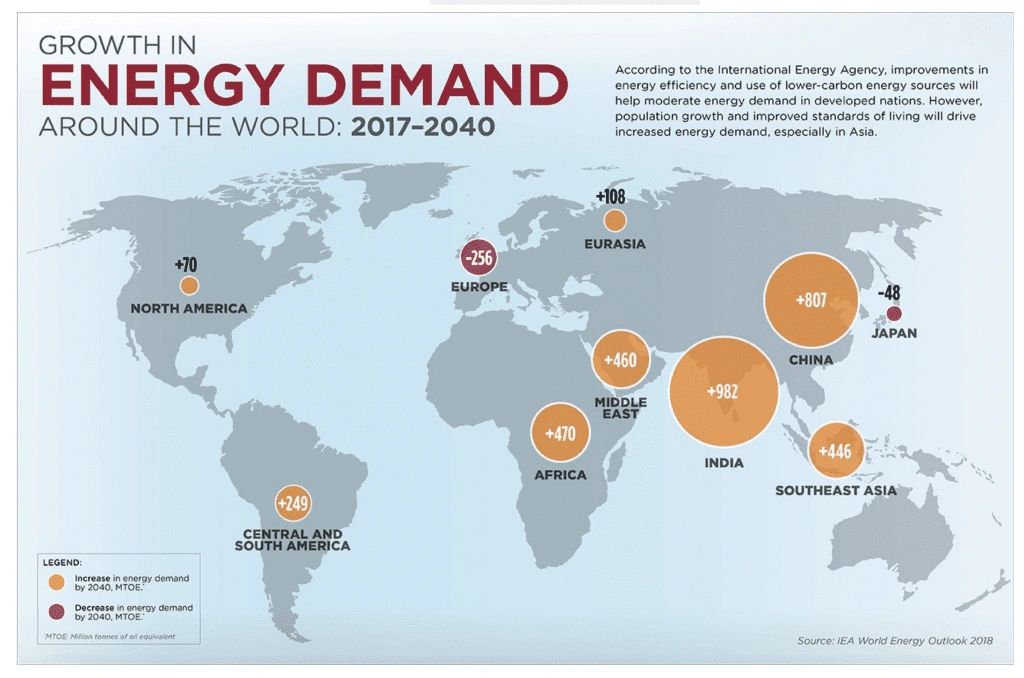
The energy sector is the most pollutive industry in the world, emitting 15.83 billion tons of greenhouse gasses each year. That’s more pollutive than the other industries in second and third place (transport and manufacturing), combined.
But global energy demand is only increasing. To keep pace with a growing population’s energy demands, the entire industry needs to find innovative solutions to increase efficiencies and ways to make energy cleaner, we have already made many inroads to cleaner energy – and that is not just in “green energy” but in traditional “Old School” energy like coal, oil and gas – technology has been driving these sectors forward too and toward cleaner methods and practices.
The way we generate and consume energy needs to become ever more efficient and sustainable as our global energy demands increase with our very energy hungry society. As blockchain technology and the internet of things continue to optimize different industries, one question is worth asking. Can we use blockchain for energy industry efficiencies?
Blockchain is a distributed database that allows for secure, transparent, and tamper-proof transactions. This makes it ideal for the energy sector, where there is a need for secure and transparent transactions. This article will explore how distributed ledger technology is already being used in energy, and how uses keep diversifying.
There would be no crypto mining and no crypto projects without energy, in fact without energy much of the world would stop, our lives as we know it would be vastly different. Energy is driving the world forward, powering economies and industry and keeping us connected, entertained and sustained. Andy and I have worked in the energy sector for some time and I have recently been spending quite some time in the UK and have witnessed their energy sector. Times are changing and tech is changing.
Industry-wide efforts
In the last few years, several organizations have emerged to explore uses for blockchain in the energy market. All of them work to monitor and improve Environmental, Social, and Corporate Governance (ESG) in the energy industry.
How Can Blockchain Benefit the Energy Industry?
Blockchain technology has the potential to transform the energy sector. The energy industry has been consistently catalyzed by innovations including rooftop solar, electric vehicles, and smart metering. Now, the Enterprise Ethereum blockchain presents itself as the next emerging technology to spur growth in the energy sector through its smart contracts and systems interoperability. Of the many use cases for blockchain, energy and sustainability are often less recognized. However, the World Economic Forum, Stanford Woods Institute for the Environment, and PwC released a joint report identifying more than 65 existing and emerging blockchain use-cases for the environment. These use cases include new business models for energy markets, real-time data management, and moving carbon credits or renewable energy certificates onto the blockchain.
Distributed ledger technology has the potential to improve efficiencies for utility providers by tracking the chain of custody for grid materials. Beyond provenance tracking, blockchain offers unique solutions for renewable energy distribution.

Legacy energy sectors, such as oil and gas also stand to benefit from the implementation of Enterprise Ethereum solutions. Complex systems with multiple actors have the opportunity to benefit from blockchain technology. For example, petroleum is one of the most traded commodities and requires a network of refiners, tankers, governments, and regulatory bodies. The complex network of participants suffers from stiffled infrastructures and numerous process inefficiencies due to out dated technology. Large scale oil and gas conglomerates are now seeking to invest in and implement blockchain technology because of its ability to lower costs and reduce harmful environmental impacts.
Oil and gas companies are particularly concerned about privacy and trade secrets. These private blockchain networks offer data permissioning and selective consortium access to pre-approved parties. Private and consortium blockchains provide an interim solution until public blockchains can implement the necessary privacy features businesses demand.
The main benefits of blockchain in the energy sector are:
- Reduced costs
- Environmental sustainability
- Increased transparency for stakeholders while not compromising privacy

What are the Blockchain Use Cases in Energy?
ConsenSys Solutions works with a range of blockchain products that can be tailored to address various energy or sustainability applications, including the following:
How does blockchain impact wholesale electricity distribution?
Companies looking to implement blockchain technology into wholesale electricity distribution focus on connecting end-users with the grid. Blockchain technologies combined with IoT devices enables consumers to trade and purchase energy directly from the grid rather than from retailers.
Grid+ is a blockchain energy company focusing on wholesale energy distribution. The firm has identified retailers as the driving source of inefficiency in the consumer electricity market. Retailers own very little of the grid infrastructure. Instead, they only manage the kinds of services that blockchain technology can replace, such as billing and metering usage.
Supplementing retailers with a blockchain-based platform has the potential to reduce consumer bills by around 40%. By connecting users directly to the grid, Ethereum allows users to buy energy from the grid at a cost they desire. The result is a more equitable and stable energy market with lower electricity costs.
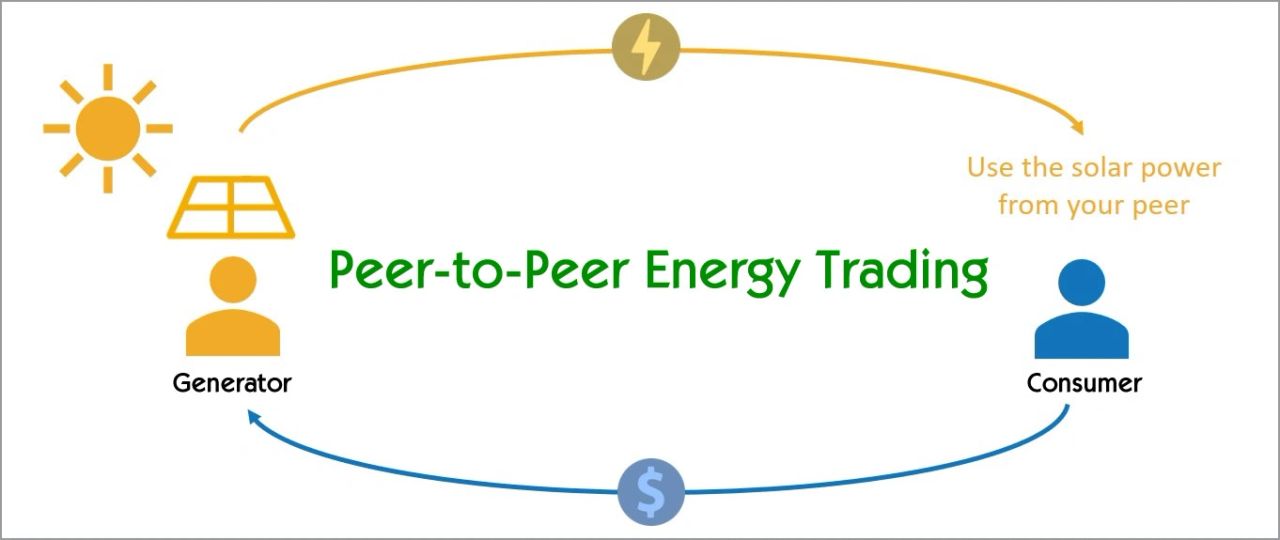
How does blockchain impact peer-to-peer energy trading?
While wholesale energy distribution is a primary application for many companies, it’s not the focus of all energy firms. A Blockchain In Energy report by Wood Makenzie shows that 59% of blockchain energy projects are building peer-to-peer energy markets. A peer-to-peer energy market is a shared network of individuals who trade and buy excess energy from other participants. These energy markets benefit the masses because they reduce control from central authorities, such as wholesale entities.

Most firms are using enterprise versions of Ethereum. For example, the Energy Web Foundation utilizes Ethereum, Truffle developer tools, and Gnosis multi-signature wallets to build out their platform. EW Zero is an open-source platform that demonstrates how effective blockchain can be for carbon token trading. Complying with the Crypto Climate Accord, EW Zero helps crypto mining companies source their electricity from renewables. If sustainable electricity isn’t available, companies can buy EACs that will fund renewable power plants elsewhere.
Energy Web Foundation
Co-founded by Rocky Mountain Institute, a low-carbon energy think-tank, and blockchain developer Grid Singularity, Energy Web launched early 2017. Founded by 10 affiliates, EW had invested nearly $322 in energy blockchain startups by the first quarter in 2018.
In 2019, EW opened the first open-source blockchain for the energy sector, the Energy Web Chain. They now offer software development toolkits and an open-source stack of software and standards.
“As electricity systems around the world increasingly digitalize,” EW says, “we are proud to be one of the leading partners helping energy market participants harness decentralized technology in support of a low-carbon, customer-centric energy future.”
In a similar vein, Hedera offers Guardian 2.0, an open-source solution to ESG assets. Offering open-source solutions and a library of DLTs, the Guardian helps developers create or digitize carbon offsets and credits.
As more and more countries reach energy parity the cost of renewable energy becomes equal to or lower than traditional retail energy. Individuals who produce their own energy will have the ability to trade it with their neighbors and peers. The Australian-based company, Power Ledger, has connected communities to one another to create “microgrids.” Microgrids are a group of interconnected loads and distributed energy resources. Microgrids currently exist as a layer on top of the national grid; however, theoretically, they can be separate and self-sustaining. Many blockchain energy companies imagine a future with larger and entirely distributed peer-to-peer grids.

Power Ledger (POWR) is a blockchain-based platform released in May 2016 with the goal of disrupting the global energy industry by enabling local areas to sell and distribute solar power to their neighbors without the help of middlemen. It is a technology company that uses blockchain to facilitate energy and environmental commodity trading.
Power Ledger (POWR) is an Australian blockchain-based cryptocurrency and energy trading platform. It allows for decentralized selling and buying of renewable energy. The platform uses POWR tokens, which enable consumers and energy providers to interact within the ecosystem. These tokens are protected through Smart Bond technology

Powerledger is not just a token but also a software and technology company that focuses on making renewable energy more stable and responsive. Founded in 2016 by Dr Gemma Green and John Bulich. They develop software for clients and partners, allowing consumers and producers to track, trace, and trade every kilowatt of energy. Their mission is to create markets that remove obstacles to 24/7 renewable energy, empowering ordinary citizens and corporations alike. They use blockchain, AI, and Web3 to solve pressing energy challenges and enable customers to access and trade cheaper, cleaner electricity
How does blockchain impact electricity data management?
Blockchain can provide consumers greater efficiency and control over their energy sources. Additionally, an immutable ledger provides secure and real-time updates of energy usage data. Various types of energy data include market prices, marginal costs, energy law compliance, and fuel prices. In April of 2018, the Chilean National Energy Commission (CNE) announced it had launched a blockchain project focused on energy. The governmental department will use the Ethereum blockchain to record, store, and track energy data.
Data is often intentionally manipulated or unintentionally misreported and omitted. The financial costs of intentional corruption and accidental clerical errors can be detrimental to businesses and governments. In the spirit of transparency, the CNE will allow the public to access the records of transactions and prices. The transparency of public blockchains further reduces the chances for monetary or data exploitation.
How does blockchain impact commodity trading?
The gas & energy commodity trading industry is another realm of potential disruption through the use of blockchain technology. Companies have invested millions in building proprietary trading platforms tailored to the unique energy trading industry. Significant costs are required to maintain, update, and secure these systems. Commodities trading requires maintaining a massive ledger that records trades and commodity prices at specific moments in time. Applying blockchain technology to commodity trading would be cheaper and more efficient than existing proprietary systems. Immutability, security, and immediacy can all be programmed in the blockchain removing the slow adaptability of large scale proprietary systems.
Using blockchain, transactions in energy trading are instantaneously recorded. Because the ledger is immutable and transparent, blockchain in energy trading is an ideal way to settle disputes. But how does this connect to the environment? And how is blockchain used in renewable energy?
Well, there are a few ways. By tokenizing renewables and digitizing facilities, companies can buy energy attribute certificates (EACs) or CO2 removal credits. Hedera has a similar project in partnership with the Queensland Government. The project will provide the Queensland State Government and Cohort with granular energy usage statistics to empower their decarbonization initiatives. As mentioned further above EW Zero helps crypto mining companies source their electricity from renewables. If sustainable electricity isn’t available, companies can buy EACs that will fund renewable power plants elsewhere.
DOVU also uses the Hedera platform to provide a tokenized data economy for DeFi carbon offsetting. It connects land owners who’ve committed to carbon sequestering practices and investors or businesses who want to offset their carbon footprint.


How does blockchain impact utility providers?
Electric power providers are large and complex firms that generate energy from power plants, solar farms, and various energy sources. Utility providers don’t compete with one another in the same respect to financial services or the banking industry. These firms are more willing to share information and data, which presents a unique opportunity for blockchain’s shared ledger.
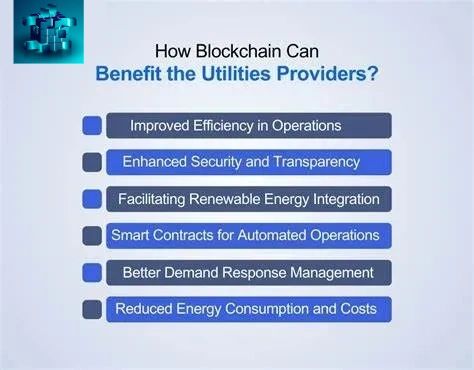
Greentech Media, a leading clean energy market analysis firm has identified three ways in which utility providers can benefit from distributed ledger technology. Enterprise Ethereum can process and validate data from many devices at the grid edge before securing the data onto the blockchain. Secondly, energy providers can utilize blockchain to create a system for transactions of data which is critical to distribution. Lastly, distributed ledger technology can be used to develop a system for transacting energy among a diverse set of actors.
Blockchain for Energy
Founded in 2020, Blockchain for Energy is a growing consortium of business partners in the energy industry exploring blockchain. Using distributed ledger technology, they hope to reduce costs, improve timelines, and eliminate disputes within the industry.
The consortium looks for solutions and innovations across the oil and gas supply chain. As an independent nonprofit organization founded by business network operators, it hopes to influence the industry from a neutral platform. Though the oil and gas industry is the current focus, Blockchain for Energy hopes to transition to broader energy solutions.
Blockchain for Energy has monitored ESG in different areas of energy, including chemical haulage. In a month-long pilot project, using blockchain technology significantly reduced payment processing times and tracked a 100% invoice match.
Energy Blockchain Labs
International Business Machines (IBM) founded Energy Blockchain Labs in 2017. In 2020, EBL published their global assessment of blockchain and vendor services. Using digital technologies, IBM’s Energy Blockchain Labs works to improve efficiency and transparency of the carbon emissions reduction market. IBM is a member of the Hedera governing council.
With Hyperledger Fabric, the IBM Blockchain Platform helps company owners build, operate, and grow blockchain solutions. From agriculture to manufacturing, IBM’s blockchain technology has found diverse uses. In the gas industry, IBM’s white papers detail how blockchain technologies can make transactions auditable, immutable, and transparent.

How does blockchain impact the oil and gas industry?
As we can see the implementation of blockchain technology in oil and gas can assist to lower costs associated with the maintenance of various trading systems. Furthermore, blockchain can also reduce costs associated with labor, data management, data visibility, settlement delays, and inter-system communication. Blockchain can also assist in improving efficiency and transparency of all environmental aspects of the oil and gas sector to increase efficiency and lower carbon emissions.
Accurate data management is one of the most key issues in environmental efforts in the energy industry. Energy use information can be intentionally manipulated or omitted or be accidentally misreported. These mistakes are costly to energy companies, governments, and the environment. Siloed data storehouses are opaque and difficult to audit. In comparison, a blockchain network collects and shares data instantaneously between all parties, without fear of tampering.
BTL Group, an enterprise blockchain company, recently completed a pilot project with ENI, BP, and Wein Energie. The pilot demonstrated that the use of blockchain technology to facilitate and track gas trades reduced overall costs by 30–40%. The company plans to test the platform with other resources besides gas. Instead of building out a system for each commodity, Enterprise Ethereum enables fast integration of new commodities by re-programming the original smart contract.
The oil and gas industry is comprised of thousands of companies. These firms are roughly split into three categories : upstream, midstream, and downstream. The journey of one drop of resource can include hundreds of separate entities, companies, processes, and legal agreements.
BTL Group: A First-Mover In Blockchain Technology (OTCMKTS:BTLLF) | Seeking Alpha
How does blockchain impact the upstream oil and gas segment?
Upstream refers to the parts of the industry having to do with resource exploration and extraction. The upstream oil and gas segment is dominated by four key stakeholders: majors, NOCs (national oil companies), independents, and oilfield services. Majors are large oil and gas companies that manage or own oilfield and well activity. Upstream requires the involvement of dozens of stakeholders, all of whom rely on the data provided by other firms. Blockchain technology optimizes for wide-scale, multi-party data coordination.
How does blockchain impact the midstream oil and gas segment?
Midstream refers to parts of the industry involved with storing and transporting resources once they are extracted. Midstream also includes the management of vast transportation networks and substantial regulation. The midstream oil and gas segment can benefit from disaster mitigation and infrastructure maintenance. The heavy regulation and asset intensity require oil and gas companies to focus on risk mitigation. Consequently, these firms can uniquely benefit from sharing information with others in the industry. Blockchain technology excels at providing multi-stakeholder information sharing, especially for asset tracking.
How does blockchain impact the downstream oil and gas segment?
Downstream refers to companies that refine resources into the multiple final products (refineries & chemical plants) or sell products to end users (petrol stations – or gas stations in the US). Further, downstream includes the management of dozens of different products. These products are directed towards different customers, have different environmental regulations, and require various methods of transportation. Blockchain-enabled supply chains such as VeChain optimize wide-scale and multi-product coordination. The ability of a blockchain technology platform to record and track supply chains could stop an immense amount of waste.
Moreover, a platform that utilizes smart legal contracts can replace time, energy, and money currently required by all involved energy companies. An immutable ledger can help manage and track data that is necessary for all stages of oil and gas production. This would further save both time and money by ensuring nothing is misplaced or lost.
Blockchain can majorly benefit oil and gas and the energy sector in a vast array of ways and across so many aspects. The applications are abundant and the effects of this integration could dramatically change the energy sector in the next decade.

The markets are always moving and Blockchain never sleeps! There is a lot to love about blockchain and crypto. Where will the market be within the next 10 years? How much more impact will blockchain and crypto have on the traditional markets within that time? How much more intertwined will blockchain be with daily society, business, major industry, enterprise and technology? How many more industrial, large-scale companies will turn to blockchain tech? There is no doubt that we will see some of these major blockchain companies charge up the rankings and sit amongst the heavy weights over the next decade, how many of those will we see list on the stock exchanges and how many more stock market majors will introduce more blockchain solutions? There is no doubt there will be more cross influence with Blockchain and DeFi have on the financial markets and TradFi? Only time will tell, but one thing is for sure, it will be an exciting journey filled with opportunity.
Happy Mining and Happy Bitcoin
Rusty Rigs


Disclaimer: The content on this site and in this communication should not be considered investment or financial advice. Any investing or crypto mining is speculative. When investing your capital is at risk, please do your own research and invest and make your decisions wisely. Mining profits are not guaranteed and may vary over time depending on the market performance and network hashrates.