
September Swing – Bring on Uptober!


September and Q3 has been and gone – and the crypto market is moving toward an end of year rally. Across the traditional markets September has been a pretty wild ride but for crypto September has seen the price of many cryptocurrencies rally and a steady rate of appreciation has been seen across much of the market. Altcoin season is almost upon us, and we have some interesting larger macro situations unfolding that could lend to a pretty decent market rally overall for this next phase of the cycle. Could we be entering a Bitcoin (BTC) Supercycle and will we see Memecoin madness overtake DeFi Delerium through altcoin season? Bitcoin held on exchanges fell to a new low while spot Bitcoin ETF inflows resumed pace. is the September Crypto Market Wrap and Q3 Markets review. Is Uptober on?
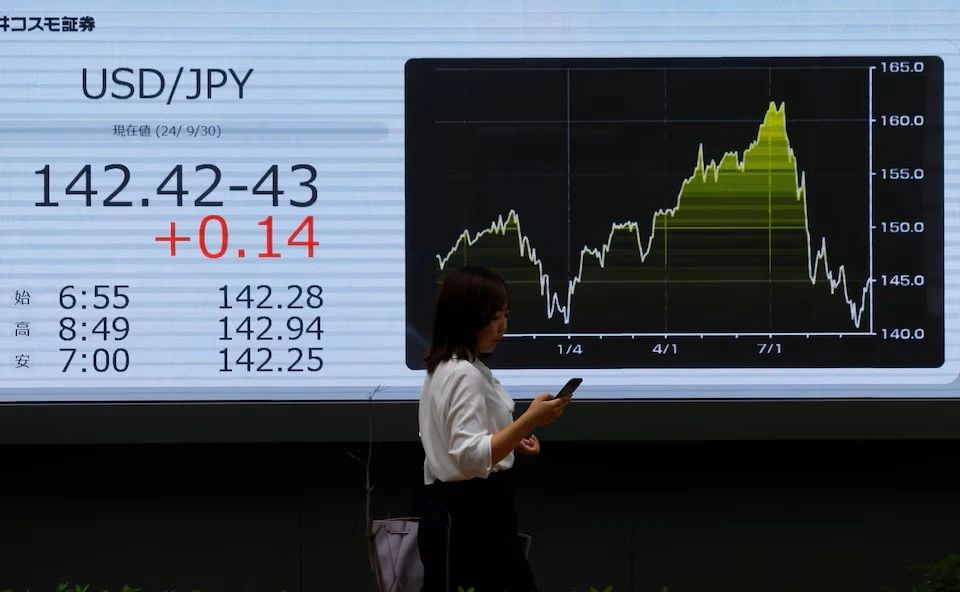
Yen thrills and oil spills in Q3’s stock market rollercoaster
- Q3 dominated by surges in Japanese yen, Chinese stocks
- Oil falls 17%, central banks cut rates
- U.S. election expected to bring more volatility
- Gold thrives on heightened uncertainty
- Crypto regains ground across some sectors
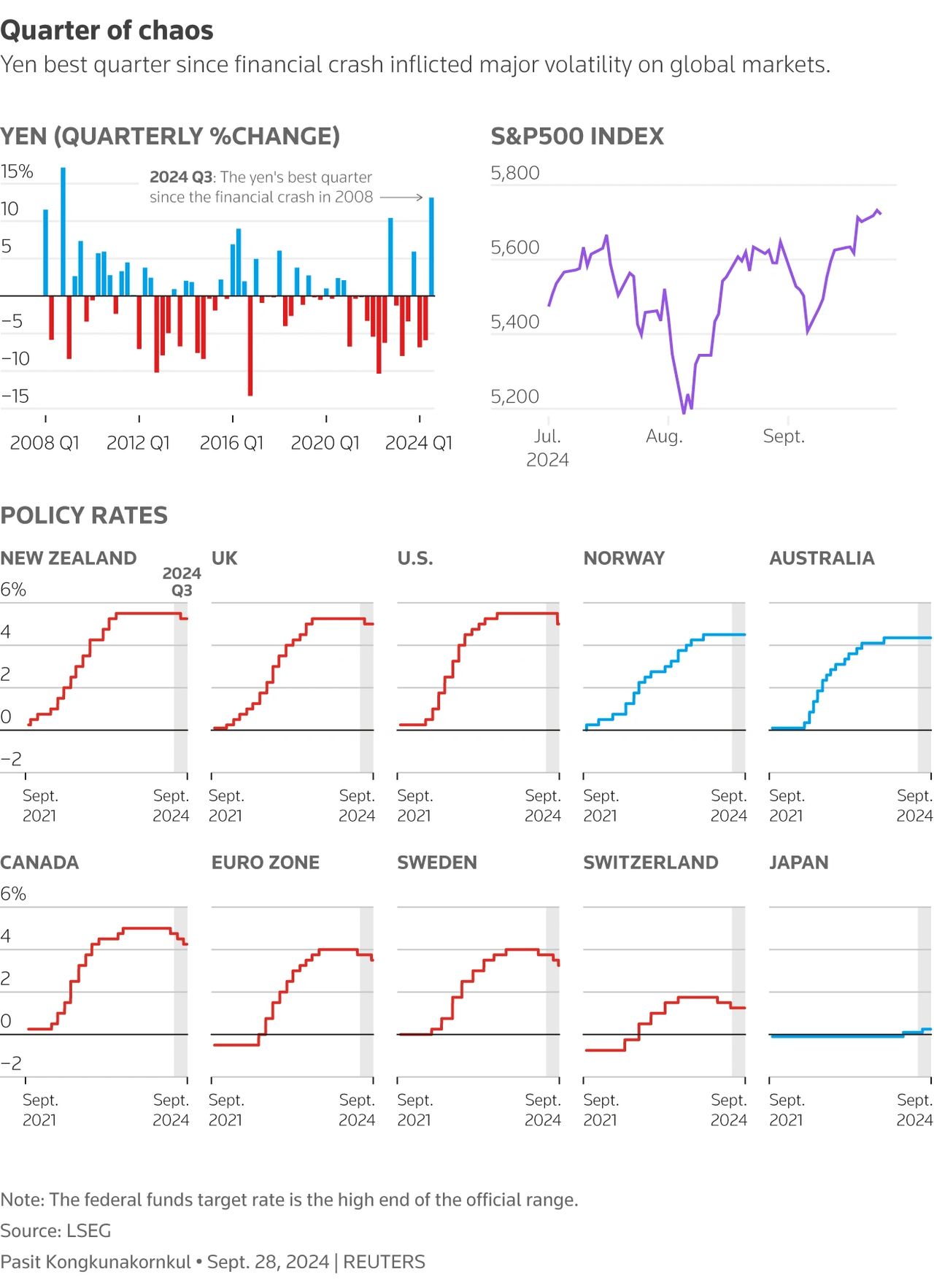
The yen’s strongest run since the 2008 global crash, central banks swiveling at speed, oil diving, gold shining and China spraying economic stimulus. The Q3 scores show world stocks and U.S. Treasuries both up around 6%, gold almost 15% higher, the yen up a whopping 11%. Oil is 17% lower and central banks have just delivered the biggest batch of interest rates cuts since the COVID-19 pandemic. Meanwhile our own Aussie ASX had the best September quarter since 2013!
The storms started when the normally docile yen went wild at the idea of higher Japanese rates at almost exactly the same time U.S. economic data started looking queasy.
In just a few weeks, MSCI’s main world equity index shed $6 trillion in one of the fastest sell-offs in years, especially for Big Tech. Traders went from pricing one or two U.S. rate cuts this year to five or six.
“The biggest thing that happened in Q3 was that the yen carry trade broke down,” Societe Generale’s Kit Juckes said, explaining the strategy of borrowing cheaply in Japan to buy higher-yielding assets elsewhere.
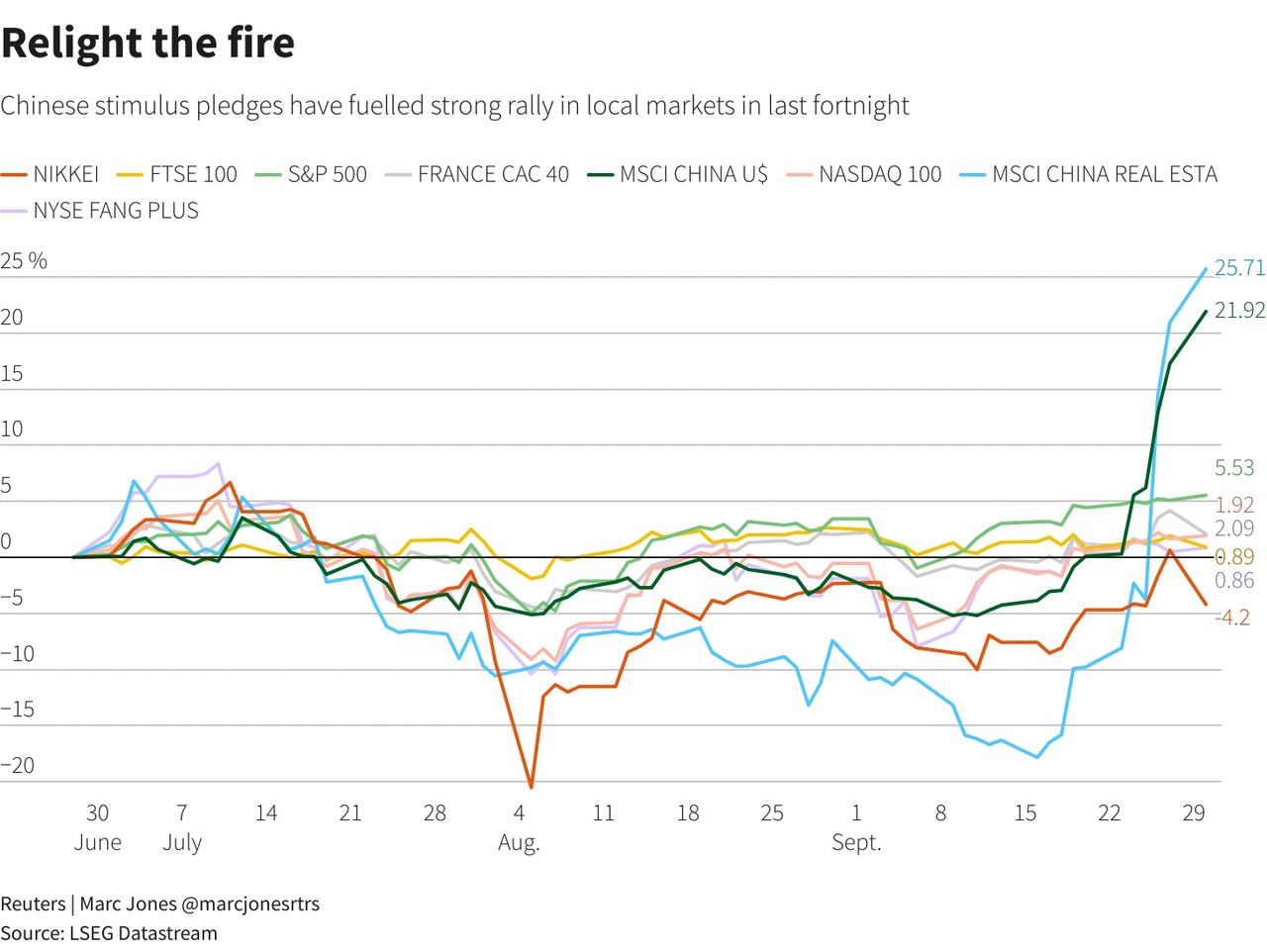
The prospect of lower borrowing costs did the trick though. By the end of August, world stocks had rebounded, and Chinese markets were about to make a remarkable turnaround of their own. As Beijing turned on the stimulus taps, including lower rates and measures aimed at the ailing property market, Chinese stocks have just notched up their strongest week since 1996 and real estate shares have rocketed by a third. China’s largest stimulus has also helped spur the biggest quarterly spike in both emerging market stocks and the main global volatility gauges since 2022. “China needs to recover to see a turnaround in the asset class,” said Claus Born, an emerging markets equity portfolio manager at Franklin Templeton. “China’s influence is very important”.
Among the “Magnificent Seven” tech stocks that dominate world markets – Nvidia (NVDA.O), Microsoft (MSFT.O), Amazon (AMZN.O), and Google (GOOGL.O), – are all ending the quarter lower than where they were at the start. Don’t panic yet though, Apple (AAPL.O), Meta (META.O) and Tesla (TSLA.O), are up 9%, 13% and 32% respectively in Q3 and Nvidia is up a staggering 145% for the year.
In commodities, the big Q3 shift has been the 17% slide in oil, despite escalating conflict in the Middle East where Israel’s bombings have now spread to Lebanon. The Middle East tensions and the weaker dollar have helped gold to set new record highs, and it looks set have had its strongest quarter since 2016.
In agricultural commodities, cocoa shortages have pushed prices up 87% for the year, which will be its second biggest annual price jump on record barring a Q4 meltdown.

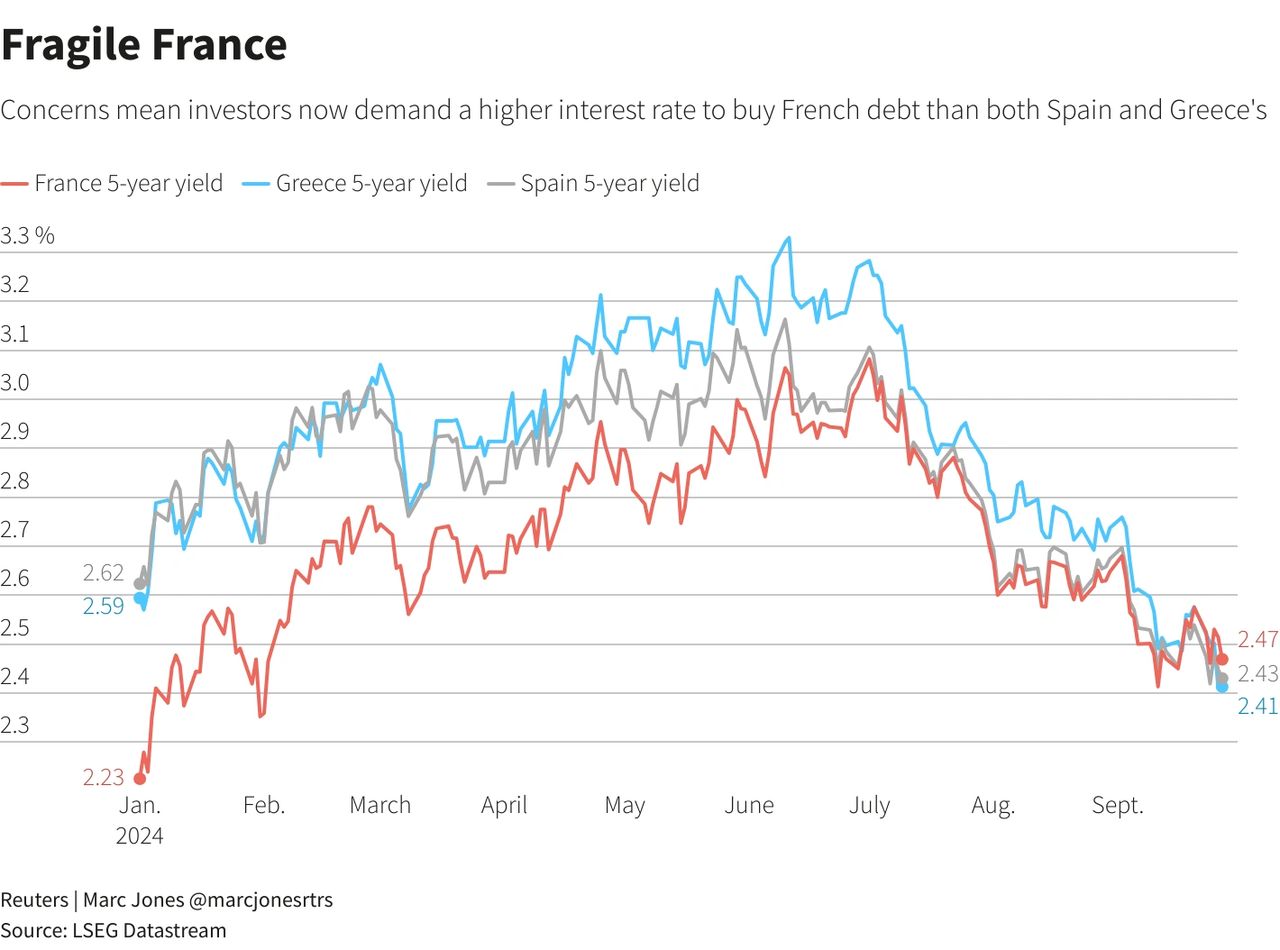
Europe has not escaped the volatility. French bond risk has exploded to its highest level since the euro zone crisis after gains by the far right has caused major headaches for French President Emmanuel Macron. As a result, investors are now demanding a higher interest rate to buy 5-year French debt than they do from Greece, the country that was at the centre of the euro zone crisis. The euro has also fallen against European peers like Britain’s pound and the Swiss franc. Distressed debt specialist fund Gramercy said the rise in French government bond yields which also includes the Franco-German yield differential topping 80bps had prompted comparisons to the “Liz Truss moment” that the UK gilt market endured two years ago.

Major investors say ASX valuations may have peaked after the best September quarter in more than a decade, pushed along by growing certainty that interest rates will fall and an economic stimulus in China.
The S&P/ASX 200 Index hit its seventh record high of the month on Monday, capping a remarkable turnaround from the worst sell-off since the pandemic that struck the benchmark in August, when there were fears of a US recession.
The ASX 200 rose 6.5 per cent in the three months to the end of September, its best quarter of the year and the best September since 2013. The rebound was propelled by the US Federal Reserve’s first interest rate cut in more than four years, and surprise spending from authorities in China who are hoping to jump-start a stalled recovery after the pandemic.
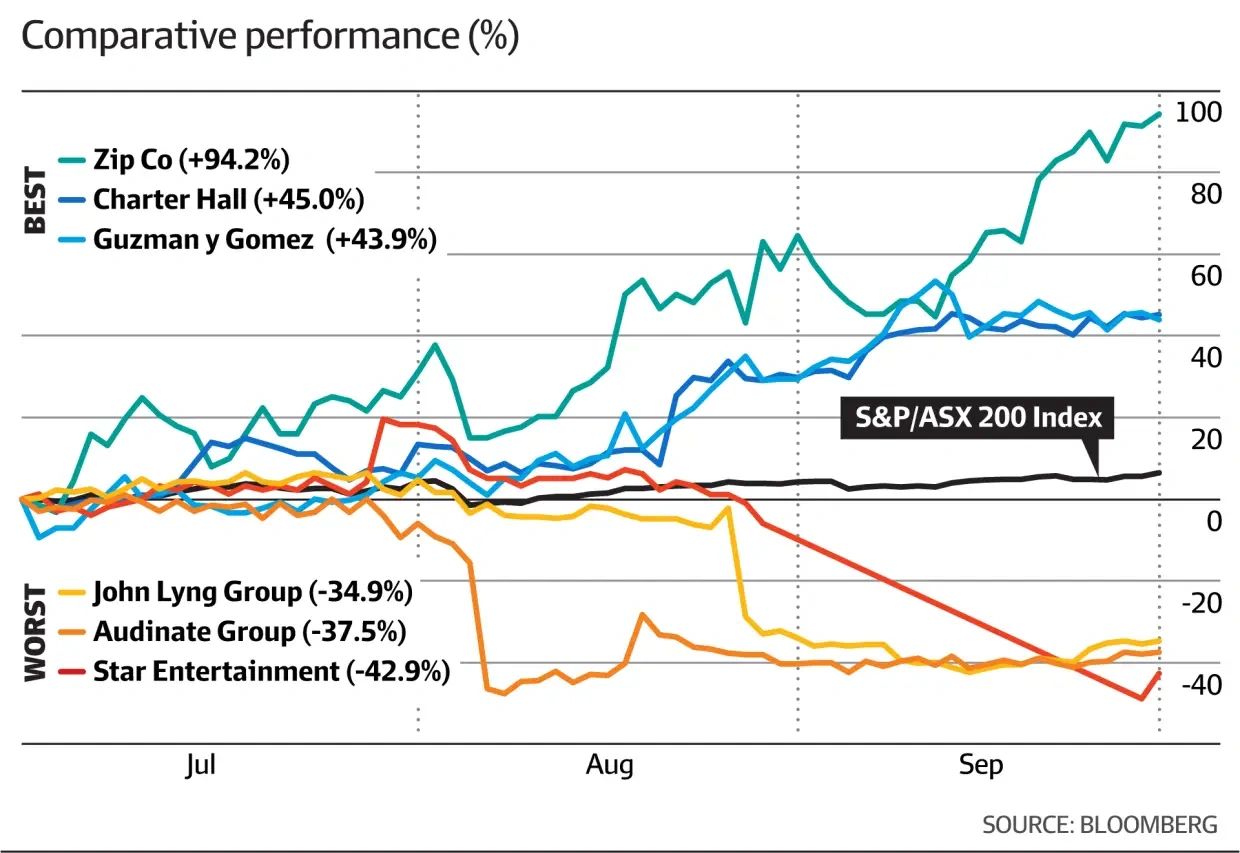
But many investment banks, brokers and fund managers have been surprised by the extent of the rally, including Jason Steed, head of Australian equity research at JPMorgan.
“I didn’t anticipate this kind of market strength,” he said. “I wouldn’t say I was bearish coming into the year, but certainly was not as bullish as the price action that we’ve seen suggests.”
It wasn’t all great though as most of the mining sector has taken a huge beating in recent months, but this has not swayed people from rushing in to pick up battered mining stocks with many of those having still paid massive dividends in recent payouts.
The ASX closed at 8269 points on Monday, but JPMorgan’s forecast for the benchmark is well below that at 7800 points. Analysts at Morgan Stanley are more bullish with an ASX target of 8100 points, but that’s still more than 100 points lower than the benchmark’s current trading levels.
The rally, Mr Steed added, appeared at odds with a weak outlook for earnings for many big Australian companies, which could make share price gains more difficult in the future.
“It’s really hard to see the overall market gaining much over the next six to 12 months. The market in Australia is constrained by a relatively weak earnings outlook,” Mr Steed said. Overall Australian economic strength, rate cuts and the inflation rate will have a large impact of the outlook for the Australian market as we move though the next few quarters along with the ongoing war fronts in the Middle East and Ukraine, Chinese and Asian markets stabilizing and the fallout or success from the impending US election.
Jack Gabb, an equity analyst at investment firm Pendal, said a big support package from Chinese authorities had reassured investors and sent them back to buying riskier assets. That had driven shares higher. “Add to that a swath of positive economic data in the US and a further drop in oil, and it couldn’t have been much better on the macroeconomic front,” he said.
ASX September Winners: The 50 best stocks in a strong month for markets – Stockhead

TRUMP CARD
But there’s no chance of a quiet end to the year, with the fourth quarter set to be dominated by November’s U.S. election between Donald Trump and Kamala Harris. Analysts at BofA highlight that even in normal conditions the CBOE’s VIX index the Wall Street “fear gauge”, typically rises around 25% between July and November in U.S. election years.
The vote – which could bring trade tariffs if Trump wins – will trigger even more turbulence if investors sense the outcome might influence the Fed’s rate plans. JPMorgan’s economists estimated U.S. inflation could jump 2.4% if Donald Trump wins and slaps a 60% tariff on all China imports and a 10% universal minimum tariff on those from elsewhere. They also think it would push the dollar up 4-6%. Plus, it is widely believed that crypto will be a major benefactor should Donald J Trump Win.
Fidelity’s Henk-Jan Rikkerink said that the real wild card for the markets (for Q4) is a broadly more complex set of geopolitical risks. “The conflicts in the Middle East and Ukraine roll on, with no end in sight, and the US election beckons on November 5th.”

BTC moved to an intraday high of $62,338 at the start of October as stronger than expected jobs data for September and bullish on-chain metrics added tailwinds to the idea of a rally in Q4.
As we can see in the chart below BTC has been very much in a holding pattern of sideways movement but with increased volatility and more prominent upswings as we move through the months since the major market rally in March.
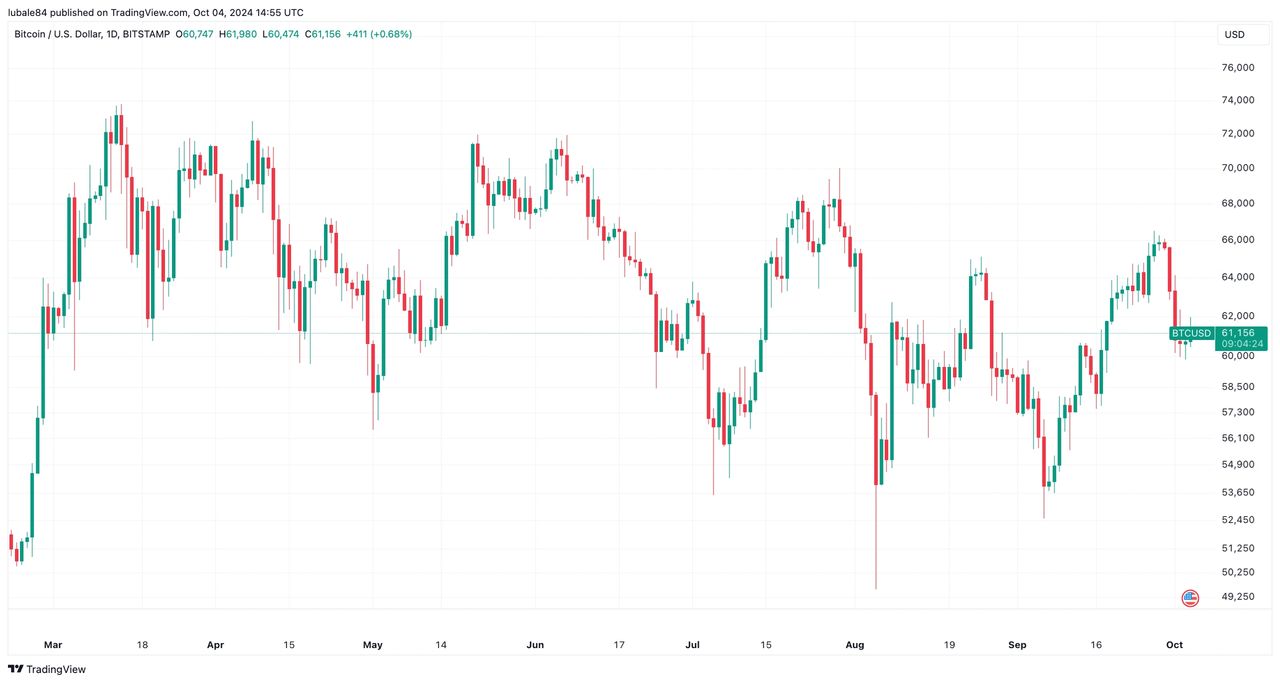
Bitcoin’s price action occurred as September’s US nonfarm payrolls print came in at 254,000, significantly higher than the expected 147,000. The unemployment rate slid to 4.1% from 4.2% in September, versus forecasts for 4.2%.
As a result, market participants have begun pricing in a whopping 97% possibility of a 25 basis point interest rate cut at the Federal Reserve’s next meeting on Nov. 7 following an aggressive half-point move in September, as per data from CME Group’s FedWatch tool.
Another possible driver behind the idea of an “Uptober” and a fourth-quarter rally for Bitcoin is the continued decrease in BTC held on centralized exchanges.
Data from CryptoQuant suggests there are over 2.8 million BTC in total on centralized exchanges, the lowest number since November 2018 and 500,000 less than the amount seen in March.
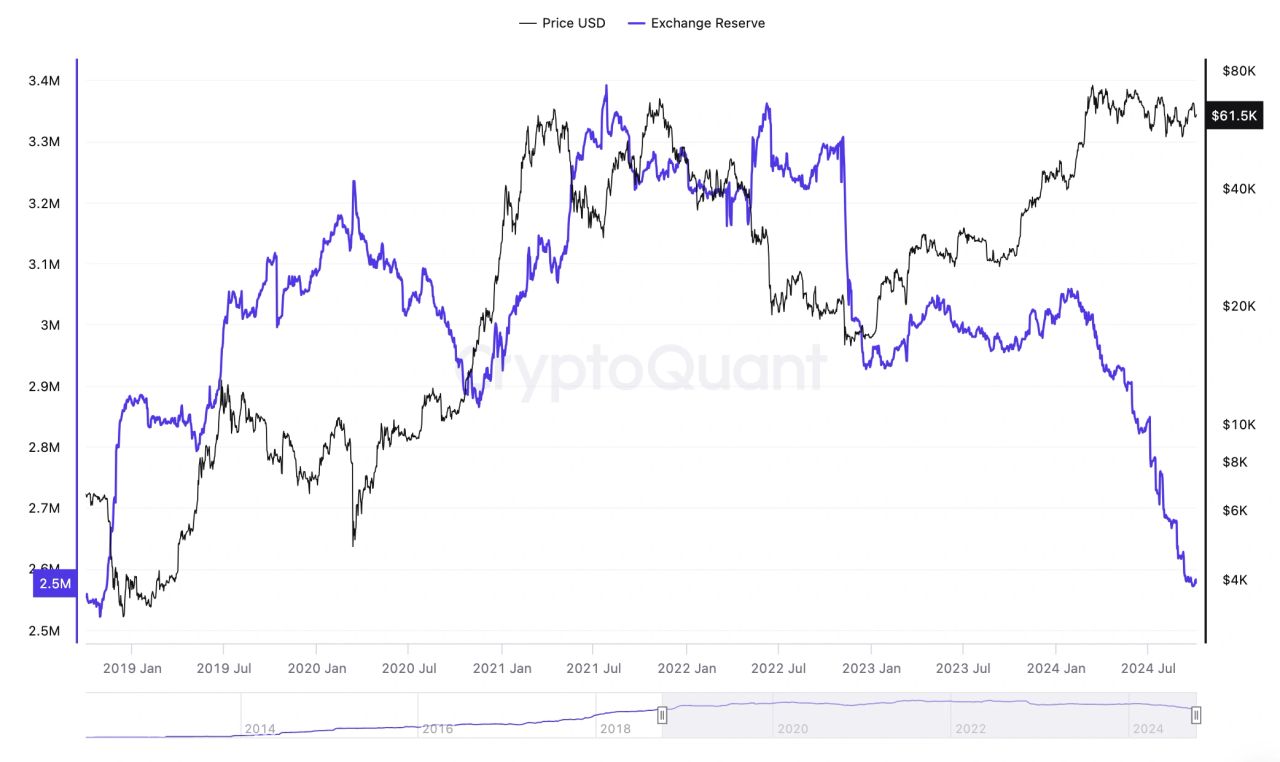
Bitcoin reserve on exchanges indicates the number of BTC coins held in known exchange wallets. A low balance shows a decreased amount of available liquidity and, in some scenarios, is followed by bullish price movements.
The data shows that the balance on exchanges has plunged by 12% in the past six months, while Bitcoin has been stuck in a wide range stretching from $50,000 to $72,000. The drop in balances is relatively similar to that seen between March 2020 and November 2020 before Bitcoin embarked on an extended rally to the 2021 high of $69,000. If history repeats itself, the declining Bitcoin reserve on exchanges could be a precursor to BTC price rising to new record highs.
Another possible headwind for Bitcoin as Q4 unfolds is increasing institutional demand through the US-based spot Bitcoin ETFs.
Additional data from CryptoQuant reveals that institutional investors went from selling a net 5,000 BTC on Sept. 2 to buying an average of 7,000 BTC by the end of September. This is the highest daily purchase of these investment products since July 21, when net buying was above 9,000 BTC. This demand boosted Bitcoin prices to the current all-time high of $73,835 in Q1, 2024.
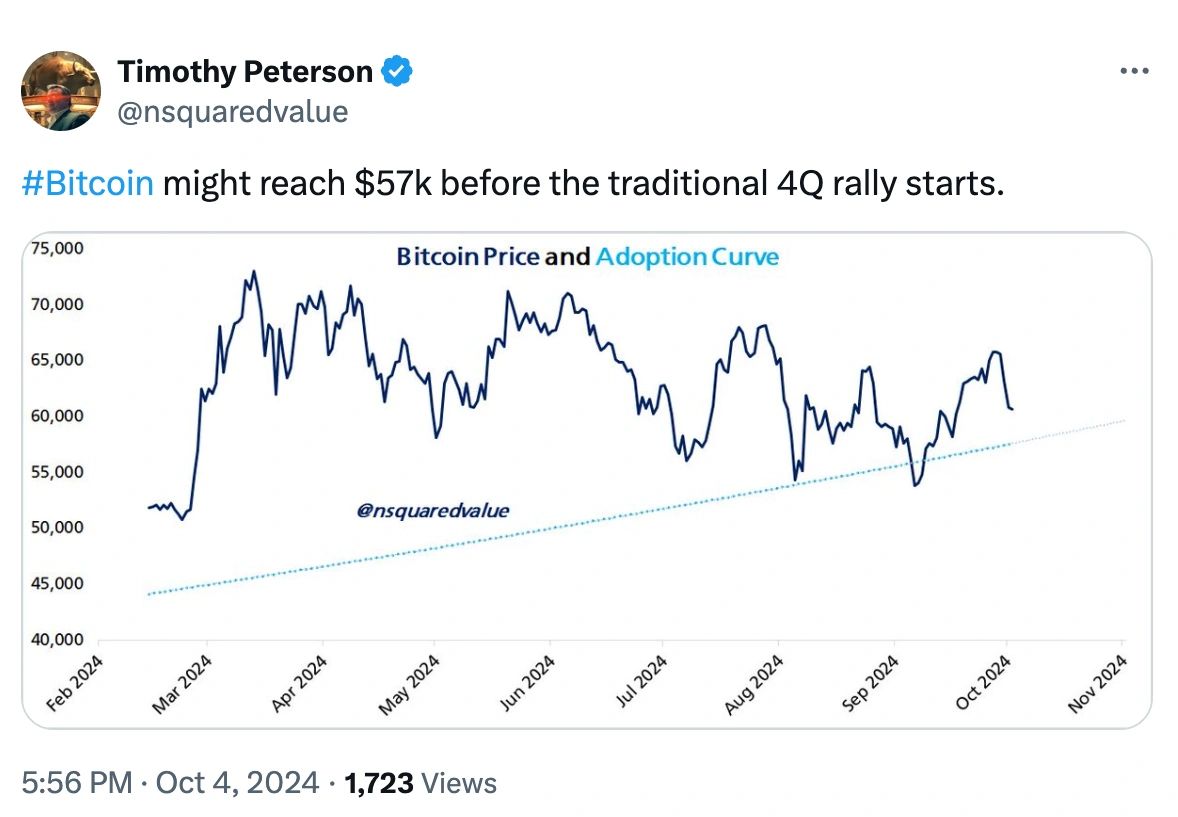
Before embarking on the much-awaited Q4 rally, crypto analyst Timothy Peterson believes Bitcoin price may first drop to rest the adoption curve at $57,000. Could that be our final time ever to pick up BTC below $60K USD?

Bitcoin’s bull market cycle has been accelerating, running 100 days ahead of its typical four-year cycle, according to a new report by CoinMarketCap (CMC).
Bitcoin is potentially on the way to breaking its traditional four-year cycle and entering a supercycle, CMC stated in its third-quarter market research report released on Oct. 3.
According to CMC Research and other soucres, multiple factors suggest Bitcoin’s potential entrance into a supercycle, driven by institutional adoption, BTC exchange-traded funds (ETF) and changing market dynamics. I have been speaking about this and the changing market conditions throughout the bear market cycle and we have seen an unfolding of events with some loosening of the reigns by the SEC, increased crypto inclusion in political campaigns globally across most western governments, and degree of easing within other major economies with a broader level of inclusion and adoption for crypto emerging, along with the inclusion of institutional investment on a significantly larger scale with the launch of the BTC and ETH ETF’s in multiple financial markets.
Throughout many of these blogs over the years I have spoken about the market cycle and the BTC/crypto cycle whereby we find the crypto market heavily influenced by BTC’s halving cycle pattern, and this too has a similar effect across other cryptocurrencies such as Litecoin.
According to CMC, Bitcoin’s price performance, coupled with the latest BTC halving — which occurred earlier this year on April 20, 2024 — suggests that a potential BTC all-time high could occur significantly earlier than typically expected. Estimating Bitcoin’s current bull market progress at 40.66%. This has been spoken about by multiple industry professionals since before the last halving event in April. The growth in momentum for BTC throughout 2023 in the lead up toward the approvals for the ETFs created a slight shift.
“This time, Bitcoin is ahead by about 100 days, pointing to a potential peak between mid-May and mid-June 2025 […] Despite this early acceleration, there are signs of slowing infrastructure growth, which could indicate that broader market dynamics are evolving.”
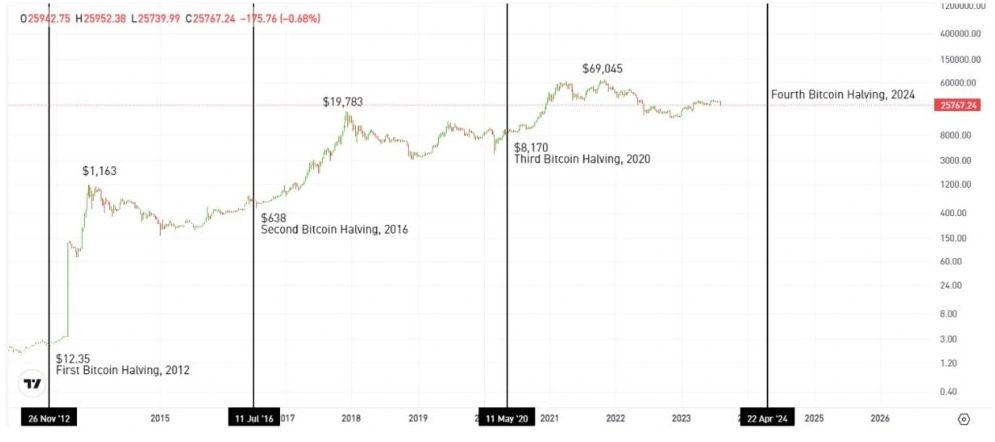
What is the Bitcoin four-year cycle?
Bitcoin’s four-year cycle is an important concept reflecting the cryptocurrency’s market dynamics. The cycle is closely tied to Bitcoin halving events, which cut BTC miner rewards roughly once every four years or when 210,000 new BTC blocks are mined.
Bitcoin halvings usually significantly impact the price of BTC, with bull markets historically peaking 518 to 546 days after halving events.
Among the factors that suggest that BTC may be breaking its traditional four-year cycle, CMC mentioned Bitcoin’s increasing correlation with traditional assets such as gold and tech stocks, as well as the growing institutional adoption from companies like MicroStrategy and Semler Scientific.
On Oct. 2, Forbes published an article titled “Why Bitcoin is becoming a part of traditional finance,” another piece of evidence that BTC is becoming increasingly adopted in the financial world.

Storage, lending and privacy sectors lead crypto market drop in Q3 2024
In a report, CMC provided the list of the top five active sectors in the crypto industry, with memecoins and Ethereum leading the chart.
Despite a rally at the end of the third quarter, 16 sectors still suffered at least 10% market cap losses in Q3, dropping up to 40%, and I know this because many of my crypto assets (especially the experimental ones) are still down year to date. According to CMC, the storage, lending and privacy sectors of the industry were struggling the most, seeing losses of 39%, 37% and 31%, respectively.
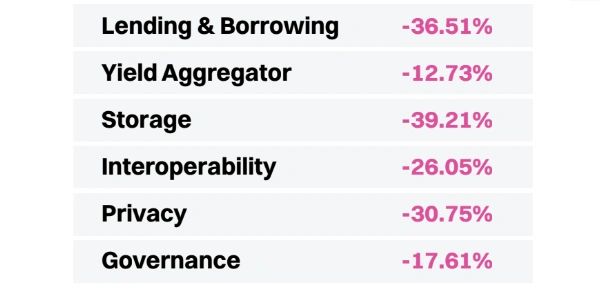
CMC noted that sectors related to decentralized finance (DeFi) and infrastructure have struggled in the Q3 bearish market amid an apparent shift to “more speculative and consumer-focused sectors” like artificial intelligence, media and memes.
The US, India and Brazil are among the largest countries for crypto users
Among other insights in the report, CMC mentioned that the United States has continued to lead the global crypto user base with a 17% market share.
India, which ranked first in Chainalysis’s crypto adoption index in September, has become the second-largest country for crypto users, with a market share of more than 9%.
Brazil, ranked third, had an 8% market share in terms of cryptocurrency users globally.
Additionally, the CMC report highlighted that Bitcoin was the most popular coin across all continents in Q3, with the market share varying from 45% in Africa to as high as 52% in Oceania.
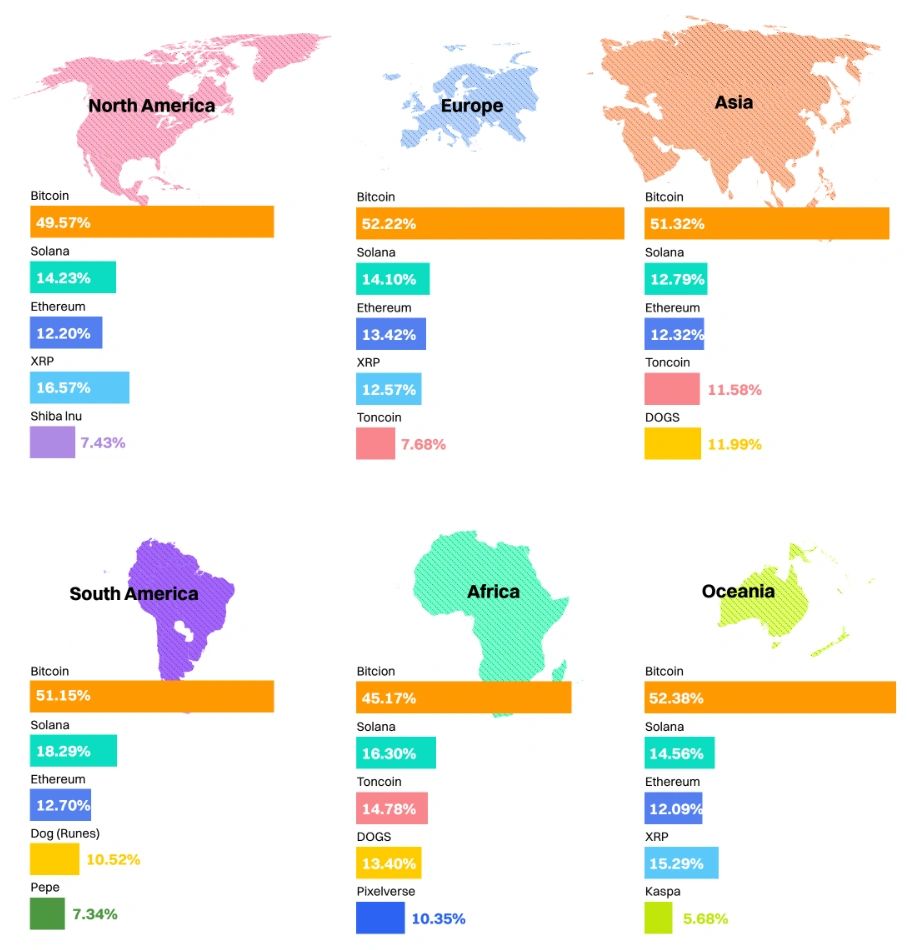
Ethereum (ETH), the second-largest cryptocurrency by market capitalization at the time of writing, ranked third across most of the regions, with an average market share of roughly 13%.
Solana (SOL), the fifth-largest crypto market by market value, ranked second in the CMC’s most popular coins globally, with an average share of 14%.
Toncoin (TON), the native cryptocurrency of the Telegram-linked blockchain project, The Open Network, was also among the most popular cryptocurrencies in Q3, ranking third with 15% in Africa.
Dogecoin (DOGE) is another popular cryptocurrency across regions as too is Ripple (XRP) and Shiba Inu (SHIB) with Kaspa (KAS) hugely popular across Oceania and continuing to grow more momentum.
US jobs report signals fewer rate cuts, still bullish for BTC: Grayscale
The bullish jobs report adds fuel to hopes for an “Uptober” and fourth-quarter rally in Bitcoin’s price.
The strong United States September jobs report signals a possible slowdown in interest rate cuts but is still bullish for Bitcoin as investors warm to riskier assets, said Zach Pandl, Grayscale’s head of research.
“Conversation about Fed rate cuts and debate about larger government deficits continue alongside solid economic growth, which should be net-positive for investors’ risk appetite and may reintroduce inflation risk in the medium-term,” Pandl said.
“Grayscale Research expects Bitcoin to benefit in this risk-positive environment,” he explained.
The US economy gained approximately 254,000 jobs in September, far ahead of economists’ expectation of some 140,000 new jobs, according to the US Bureau of Labor Statistics (BLS).

On Sept. 18, the US Federal Reserve cut the federal funds rate by 0.5% after a slowdown in inflation and sluggish economic performance in August.
In August, the BLS printed job additions of less than 160,000 and annualized inflation rates of less than 3%. Austraila’s inflation is also dropping but not quite at target rates just yet. There is a potential for a rate cut prior to the Christmas period or soon after in the new year. This will lead to an increase in confidence in the market and could propel the markets further as a result.
Futures market pricing currently reflects expectations of no more than a quarter of a percent interest rate cut at the Fed’s next meeting in November, according to CME FedWatch. Rates are currently targeted at around 4.75%.
The bullish jobs report and rate cut expectations are contributing to the idea of an “Uptober,” or a fourth-quarter rally for Bitcoin.
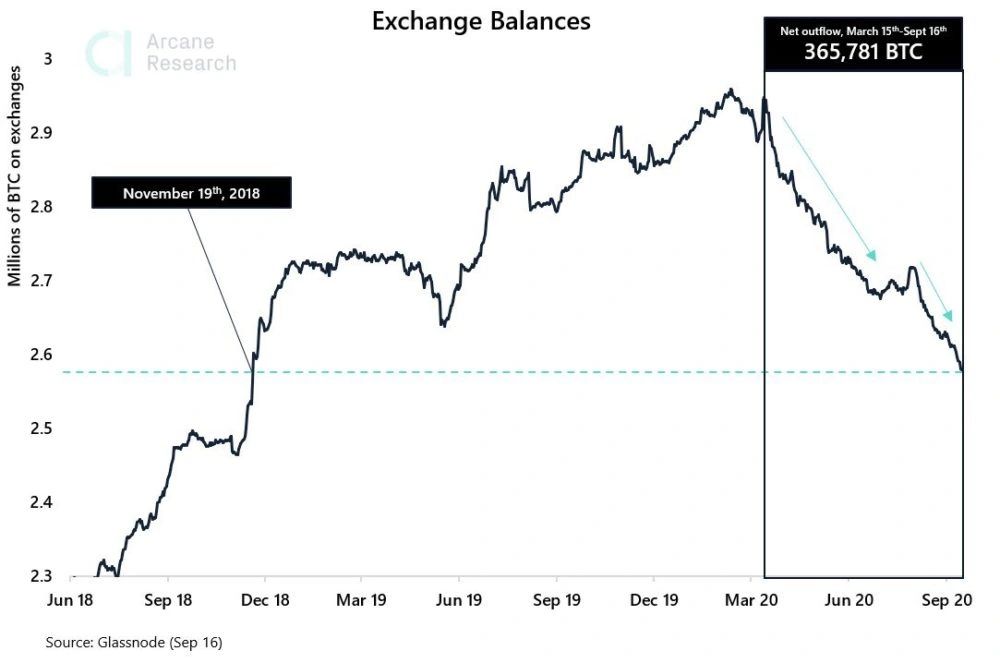
As already mentioned earlier in the blog another possible driver is the continued decline in BTC held on centralized exchanges. Multiple sources including Data from CryptoQuant suggests there are over 2.8 million BTC in total on centralized exchanges, the lowest number since November 2018 and 500,000 less than the amount seen in March. When we observe the chart above we can see a pattern emerge and could expect a growing supply of BTC moving onto exchanges, a growing demand for BTC as we see the market shift upwards and gain momentum towards the peak of the cycle.
Crypto markets have largely recovered from a sharp pullback on Aug 5th that saw the price of BTC plunge by around 18% in a day.
Grayscale is the largest crypto asset manager with upward of $20 billion in assets under management across its funds, according to the company. Institutional investment has changed the macro for crypto in a big way and as we see further integration of real world asset (RWA) crypto projects, increased Ai projects and adoption and further uptake and adoption of crypto within TradFi we could see a huge influx of funds moving into crypto markets.
Yen thrills and oil spills in Q3’s stock market rollercoaster
- Q3 dominated by surges in Japanese yen, Chinese stocks
- Oil falls 17%, central banks cut rates
- U.S. election expected to bring more volatility
- Gold thrives on heightened uncertainty
- Crypto regains ground across sectors

Financial institutions are experimenting with Bitcoin-backed lending
Lower interest rates and accelerating crypto adoption are spurring more financial institutions to try Bitcoin-backed lending.
More financial institutions are swaying toward Bitcoin-backed lending as BTC adoption gains steam among investment managers and fiat interest rates tighten, one such Bitcoin-backed lending platform – Ledn has revealed it has processed a large amount of crypto loans so far in 2024.
Institutional investors have poured billions of dollars into spot BTC exchange-traded funds (ETFs) since January, when United States regulators cleared them for trading.
Major institutions are now going beyond ETFs to focus on Bitcoin-backed lending. Ledn processed $1.16 billion in cryptocurrency loans in the first half of 2024, largely on behalf of financial institutions. The company added that lenders typically earn upward of 10% annual percentage returns (APR).
Interest rates for borrowers range from 11.4% to 13.4%, depending on the type of loan, according to Ledn’s website. With its lower-cost loans, Ledn lends out the Bitcoin collateral itself for additional yield, introducing credit risk for borrowers, the website said.
On Sept. 18, the US Federal Reserve cut interest rates on short-term US dollar deposits from approximately 5.3% to 4.8%, according to the Federal Reserve Bank of New York.
Bitcoin-backed loans are denominated in fiat currency but collateralized with BTC, which borrowers forfeit if they fail to repay the loan.
The BTC lending market comprises around $8.5 billion in outstanding Bitcoin-backed loans and is on track to grow to approximately $45 billion by 2030, according to HFT Market Intelligence, a market researcher.
Ledn competes with BTC platforms such as Arch and Salt. It will soon face off with financial services incumbents such as Cantor Fitzgerald, which announced plans to launch its own institutional BTC financing platform in July.
It also indirectly competes with decentralized finance lending protocols such as Aave.
The Bitcoin-backed loan market has benefited from a proliferation of regulated US cryptocurrency custodians, which hold spot BTC on behalf of investors.
In August, it was reported that Fireblocks — best known for its self-custody treasury management products — obtained approval from New York’s financial regulator to custody assets for US clients.
Other institutional crypto companies, such as Coinbase Custody Trust, Fidelity Digital Asset Services and PayPal Digital, are also similarly licensed.

As we move into the Altcoin season and peak of the crypto market for this current cycle we will start to see more crypto move onto exchanges in the lead up to the peak pricing activity where investors prepare to start cashing out. It will be very important to watch this market indicator as we move into this next market phase. Are we running around 100 days ahead or are we in for a slightly altered market pattern and a prolonged market peak through 2025?
The key is to keep on accruing your holdings, buy in at the right points and continue your daily mining operations. Ensure that you have some great accounting software at your disposal to assist you in keeping a close eye on your holdings and enabling you to maximize your returns, minimize any losses and minimize any tax payable. I have used Koinly in the past and found it quite easy to use and very beneficial, this year, however, I used CryptotaxCalculator and although it was a little more cumbersome for me to initially get my head around (compared to Koinly), I found it quite useful and detailed. It is a very different platform to Koinly and possibly more suited to advanced users, but definitely worth checking out. I think I have found my new tax accounting software and asset management tool!
Thanks to all of you for your support, we look forward with powerpool mining to assisting you through this next phase of the market, now is a great time to grab your crypto mining equipment before prices rise along with the market uptick. Currently Scrypt, Nervos, KAS and BTC miners are at some great prices. We have some exciting changes on the way with Metamining and look forward to being able to better assist you with your hosted mining ventures as we develop and grow. Many of you that subscribe and Host with us will have heard about our Powerpool partnership, you can benefit from lower mining pool fees and increasing the decentralization of the mining networks – we also have Australian based mining servers to improve speeds and reduce latency and further enhancements on the way. Head here to set up your account for your home-based miners and hosted miners and benefit from our exclusive lower fees today https://powerpool.io/register?r=ec836e76 there will be more pools added for other coins very soon as well as more profitable solutions for merge mining and profit switching. For those of you that host with us please email info@metamining.com.au to advise us of your required pool changes.
Happy Mining
Rusty Rigs

Disclaimer: The content on this site and in this communication should not be considered investment or financial advice. Any investing or crypto mining is speculative. When investing your capital is at risk, please do your own research and invest and make your decisions wisely. Mining profits are not guaranteed and may vary over time depending on the market performance and network hashrates.