
June Wrap Up 2024

June proved to be a challenging month for the crypto industry, marked by declines in crypto asset prices and disappointing launches of new projects. The overall sentiment suggests a lack of optimism and growth drivers to sustain the bullish trajectory seen earlier in 2024. As July begins, there is hope that the potential approval of ETH spot ETFs could bring positivity to the market. It remains to be seen whether this will be sufficient to stimulate growth of crypto assets or it will be another month of uncertainty and fear for the crypto community.
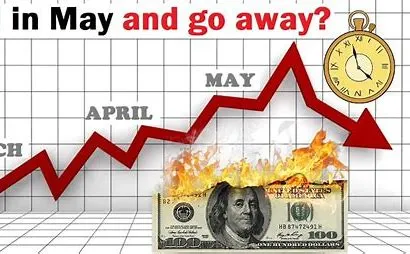
“Sell in May and go away” as BTC price dropped below $60K and altcoins market experiencing a deep correction. The Crypto market still tries to find new narratives that fuel the growth of crypto assets and reaffirm investor’s belief in the bull market run up continuation in 2024. However, investors sentiment in June was primarily pessimistic amid BTC and altcoins price decline and disappointing new token launches from established players in the crypto industry.
Sell in May and Go Away refers to a well-known adage in the business and financial world. The phrase refers to an investment strategy for stocks based on the theory that the stock market underperforms in the six-month period between May and October. In contrast, the period between November and April sees much stronger stock market growth. The question is how will the market perform for crypto over these next 5 months or so? Sure these next 5 months may prove to be a great time to top up on stock investments but so too it may prove to be a great time to fill your crypto bags before next years run to the top. It may also prove a valuable time to add hashrate over these months before machine prices rise next year in the true bull run.
June has seen much of the gains from January to May erased across most coins and we may see some further falls yet, the market never moves in a straight upward trajectory and this is a good thing as it provides opportunities to leverage in and DCA with not only your coin purchases but also your mining machine purchases. Now is a great time to DCA and top up on those key projects you are invested in. It may prove to be very valuable to add additional hashrate across BTC, Scrypt, CKB and even Kaspa mining as machine prices have slightly pulled back.
Token airdrops from zkSync (ZK) and LayerZero (ZERO) provoked a heated discussions about the future of airdrops meta and “retrodrops” farming as the results for many users were frustrating combined with weak performance of tokens after listing.
The current crypto cycle has been a somewhat unusual ride so far, with the dominant themes being ETFs, memecoin madness, and also the seemingly unstoppable rise of Solana after its 2022 post-FTX crash.
And while major alts including SOL may be enduring a price pullback right now, Solana developers just made a major announcement that could scale the blockchain up to the next level.
Solana Scales Up With ZK Compression
Over the weekend 22/23rd June, Solana developer platforms Light Protocol and Helius announced the collaborative launch of ZK Compression on Solana.
This development is not a Layer-2 project, it directly scales Solana at the Layer-1 level (so for users there are no bridges, new tokens or additional friction), and is described by Light Protocol as “a new primitive” that is “orders of magnitude cheaper”, while leading Solana DEX Raydium posted that ZK Compression “slashes the cost of creating tokens and accounts by a staggering 99%, while also enhancing privacy”.
Helius CEO Mert explained that the deployment allows developers to “compress onchain state to get 10,000x scale improvements and get 1 step closer to building The Financial Computer”, and gave the simple example of a hypothetical airdrop to a million users that would previously have cost $260,000, but can down be achieved for around $50.
At a more technical level, he outlined how there are two costs that have to be contended with on Solana–compute and state–and that while Solana already has cheap compute, the state part of that equation is now being scaled up and made–as we can see from the previous example–much cheaper through ZK Compression. Developers can already begin testing out the new tech, and it looks like it could be a major step forward for Solana adoption because, as the blockchain’s co-founder Anatoly Yakovenko put it, “it’s like an L2 without all the things that people complain about L2s.”
Pantera Capital: Solana = Mac OS of Blockchains
In other Solana news, major crypto investment firm Pantera Capital has labeled Solana “the Mac OS of blockchains” in its latest blockchain letter.
Pantera notes that “historically, developer-facing technologies have converged around a small number of dominant players”, draws comparisons with operating systems, mobile platforms and gaming consoles, and highlights Solana’s growing share of developer activity over the past year, suggesting that the shift from Ethereum to Solana “is reminiscent of Microsoft’s dominance of the early desktop computer market, until Apple broke through with its vertically integrated approach”.
From the Pantera Capital blockchain letter….
The letter then cites Solana’s architecture, UX, pace of innovation and security features as key positives, and goes on to highlight growing user adoption, along with surges in token launches and DEX volumes.
Previously, Pantera has been acquiring SOL from the FTX estate through participation in every bankruptcy auction at which the tokens–which are locked into a four-year vesting period–have been sold.
Solana’s monthly active addresses have this month reached a new all-time high, soaring to over 30 million while a year ago that figure was only around the 5 million mark, which shows how Solana’s resurgence has been one of the stories of this cycle so far.
macOS of blockchains? Solana captures 60% of new DEX volume in May (cointelegraph.com)
Standard Chartered to Launch BTC and ETH Spot Trading Desk
Over at leading multinational bank Standard Chartered, which is headquartered in the UK, there are plans to launch a new BTC and ETH spot trading desk.
As a component of Standard Chartered’s FX trading section, the spot crypto desk is to be based in London and will, according to a statement from the bank, “support demand from our institutional clients to trade Bitcoin and Ethereum”.
Regulatory compliance has sometimes been a stumbling block when it comes to traditional financial institutions offering crypto asset services–Standard Chartered explained that it has “been working closely with our regulators”–but this news, coming after the launch of spot BTC ETFs in the US and with ETH ETFs on the way, is another signal that greater integration between crypto and TradFi looks inevitable.

Crypto Hacks
On a brighter note, crypto hacks saw a slump in June 2024. According to a recent report, net losses from crypto hacks were down 54.2% compared to the previous month.
The report compiled by crypto analytics firm PeckShield highlighted 20 reported hacking incidents in June. In total, these attacks accounted for $176 million in losses.
In contrast, May 2024 saw $385 million lost to similar attacks.
The largest attack was executed on the Turkish crypto exchange BtcTurk.
In June, the exchange’s hot wallets were exploited by attackers using stolen private keys. Subsequently, the attacker was able to get away with over $100 million in crypto assets.
Initially, losses were estimated to be around $55 million, as per on-chain sleuth ZachXBT.
The second and third-largest exploits were that of centralised exchange Lykke and DeFi lending protocol UwU.
On June 4, Lykke suffered an exploit resulting in losses worth approximately $22 million. The exchange acknowledged the attack on June 10 and was criticised by the crypto community.
Similarly, the DeFi lending protocol UwU reportedly lost $19.4 million, according to PeckSheild data. The exploiter employed a flash loan attack to drain funds from the protocol.
While the platform offered a 20% bounty for returning the funds, the attacker swiped another $3.7 million from the protocol on June 13.
Coming back to the report, the top 5 biggest hacks in June comprised attacks on two centralised exchanges, followed by three decentralised platforms.
May was the costliest month for the industry, recording 385 million in losses. The majority of the losses were attributed to the attack on the Japanese crypto exchange DMM Bitcoin.
The attacker drained 4502.9 BTC worth approximately $305 million from the exchange’s hot wallets. The platform later announced plans to compensate users.
According to PeckSheild, April recorded the lowest number of attacks, with $60.19 million lost.
Quarterly losses remain high
Such a notable drop in crypto hack losses was last recorded in March 2024. Back then, PeckSheild reported a 48% drop.
Interestingly, despite the recent drop, the total net losses in the second quarter of 2024 were up 115% compared to 2023. Over $572 million was lost in Q2 2024.
Centralised exchanges accounted for the majority of the losses, accounting for $401 million, or 70% of the total.
As previously reported by Invezz, the crypto industry has lost over $19 billion to hackers over the past decade.
The 785 recorded incidents comprised 345 hacks of decentralised protocols, 220 cases of fraud, and 220 security breaches. 2011 saw the first reported hack.
It’s a timely reminder to ensure you have your crypto stored correctly – remember “Not your keys, not your crypto”, Cold wallets with high security, seed phrases, passwords, passcodes, biometric security and 2FA are your best bet when storing your crypto. As we head toward the run up for the Bull Run and next years rally I am sure that we will see more hackers trying to capitalize on people that don’t have the right levels of security or the right understanding on how to keep your crypto safe.
Mt Gox
One of the most famous hacks was Mt Gox in 2014, The defunct crypto exchange is supposed to return over 140,000 Bitcoin to victims of the 2014 hack.
- Defunct bitcoin exchange Mt. Gox said it will start distributing assets stolen from clients in a 2014 hack in July 2024, after years of postponed deadlines.
- The repayments will be made in bitcoin and bitcoin cash, and could possibly add selling pressure to both markets.
Mt. Gox about to unload $9 billion of bitcoin — what it means for BTC (cnbc.com)

Bitcoin
In June, BTC’s price dropped by 7%, falling below the key support zone near $60K and triggering massive liquidations of leveraged long positions. The decline occurred amid negative news, notably the announcement from Mt. Gox about the distribution of $9B worth of BTC and Bitcoin Cash to its clients starting in early July. However, BTC successfully bounced back from the $60K support zone, reflecting traders’ and investors’ confidence in the asset’s upside potential.
BTC ETFs experienced mixed performance in June, with several days of USD outflows, the largest being $226M on June 13. However, the final week of June saw a resurgence of positive inflows into ETFs, coinciding with the recovery of BTC price.
We’re seeing the supply of BTC held on exchanges continue to decline steadily, with around 250,000 coins having left exchanges since the spot ETFs started trading in January, taking the amount of BTC left on exchanges to below 2.5 million.
Could that mean a future supply shock? It’s certainly plausible, although there are multiple factors at play, including the behavior of long-term large holders, and regarding that cohort it’s notable that whales who’d been holding long-term have been selling in size recently.
In fact, they’ve offloaded BTC worth around $1.2 billion over the past two weeks. It’s also of note that bitcoin fees dropped by a substantial 64% over the course of June, with on-chain activity slowing, while June has seen significant selling from miners, with around $2 billion of BTC sold in June. This is the most aggressive miner offloading in over a year, prompted by decreased profitability after the halving.
With the establishment of the new BTC ETFs, BlackRock became a central player in the crypto landscape, and on top of its bitcoin fund, it also now operates BUIDL, which is an Ethereum-based tokenized fund invested in traditional assets. BUIDL has got off to a strong start since launching in March, and now holds over $460 million in assets.
Additionally, if we compare BlackRock’s BTC ETF with that of its nearest competitor, Grayscale, we can see that having overtaken Grayscale’s fund in terms of assets held, BlackRock is now further opening the gap, with the two products on opposite trajectories due to Grayscale’s higher fees.

ALTS
The altcoin market reacted negatively to BTC’s price decline in June. Among the top 10 crypto assets by market capitalization, Dogecoin (DOGE) fell by 21.9%, Solana (SOL) by 11.6%, and Ethereum (ETH) by 8.6%. The only asset from the top-10 showing positive dynamics was Toncoin (TON) with 20.4% gain amid the increasing adoption of the Ton blockchain and its collaboration with Telegram-based crypto projects.
Overall, the total altcoins market cap decreased by 13.2%, dropping from $1.21T to $1.05T in June. The average fully diluted market cap (FDMC) change across all asset categories was -24.4% in June, with NFT-related projects performing the worst with a 51.5% decline, followed by data availability services (-49.5%) and AI services (-46.9%).

Key Market Statistics
Trading Volumes
The bears were out in force in June. Following the correction in BTC and altcoins, trading volumes on centralized exchanges experienced a third consecutive monthly decline in June, dropping by 10.5% from $1.24T to $1.1T.
BTC futures trading volume decreased by 24.2% in June, reflecting slowing trading activity from both institutional and retail investors. Summer typically features lower trading activity compared to other seasons, and this historical pattern was confirmed in June. However, open interest in Bitcoin futures only decreased by 4.3% last month, demonstrating sustained interest in trading the first cryptocurrency.
After reaching multi-year highs in March, trading volume on decentralized exchanges has also shown negative dynamics for three consecutive months. In June, DEX trading volume dropped by 17%, falling from $179B to $153B.
Ethereum and Solana are the most popular blockchains for DEX trades, with trading volumes of $48.7B and $38.4B, respectively. Notably, Solana’s share in DEX trading volumes surged from 1.6% in June 2023 to an impressive 25% in June 2024, reflecting the network’s growth in user base and usage. Much of this growth can be attributed to the meme coin hype on Solana, with a record number of tokens launching on this blockchain and high interest in trading them on Solana-based DEXs.
On-chain Metrics
In June, Tron (TRX) maintained its leadership among Layer 1 (L1) blockchains by daily active addresses with 2.1M active addresses. Near (NEAR) and Solana (SOL) followed closely with 2M and 1.6M active addresses, respectively. BNB Chain (BNB) and Sui (SUI) rounded out the top 5 with 985K and 766K addresses.
Solana significantly outpaced its competitors in daily transactions, reaching 1.1B transactions in June. Near came in second with 272M transactions last month. Tron, Ton (TON), and Sui also ranked in the top 5 with 203M, 158M, and 142M transactions, respectively.

In June, Polygon PoS (MATIC) led among layer 2 solutions in both daily active addresses and daily transactions. Polygon faced 1.3M active addresses and 121M transactions during last month. Among the top 5 L2 solutions, Base is showing the highest growth rates since the beginning of the year, with active addresses growth by 733% and transactions increasing by an impressive 1012%. Base growth is attributed to its increasing popularity as a network for launching and trading memecoins.
Total value locked in DeFi protocols reached its yearly high in early June and amounted to $226.8B. However, by the end of the month TVL dropped to $196.5B showing a 9.95% monthly decrease. Despite this, DeFi TVL demonstrates a solid growth in 2024 showing a 75% increase in June compared to the end of 2023. DeFi protocols are the key drivers of blockchain’s ecosystem’s growth and one of the main liquidity sources for them. Liquid staking, lending, and bridges were the top 3 DeFi sectors by TVL in June.

The end of the retrodrops era?
June features the token launches of two highly anticipated projects: Ethereum Layer 2 solution zkSync (ZK) and the omnichain interoperability protocol LayerZero (ZRO). Alongside StarkNet (STRK), these three were dubbed the “big three” projects expected to provide huge retrodrops to their communities, following the case of Arbitrum (ARB) and Optimism (OP) with their generous token rewards to the community. However, airdrops from all three projects turned out to be disappointing for the majority of users. The projects failed to establish clear and transparent criteria for airdrop eligibility, sybil account detection, and token allocation to different user categories. Consequently, the crypto community was disillusioned and criticized the project teams for incompetence and greed.
The disappointing token airdrops were followed by weak performance after listing. zkSync (ZK) dropped by 43% in June, reflecting the lack of interest from the community and investors to buy the token at current prices. LayerZero (ZRO) also closed the month with a 19.6% price decrease.
Such performance of the top projects backed by the leading investment funds sparked heated discussions about the future of airdrops and drop hunting prospects. Opinions varied, but it is clear that the crypto market is evolving, highlighting a strong need for new models of token launches and distributions that align the interests of projects, investors, and the community. It now seems that the era of “life-changing” airdrops and retrodrops from Tier 1 projects may be over. However, the future will reveal how these dynamics will evolve.
ETH and the ETH ETF
The crypto world is looking forward to spot ETH ETFs launching in the US, and there’s plenty of speculation about how the market might be affected. With that in mind, we perhaps shouldn’t be surprised to find that ETH holders are currently scooping up more ETH, in contrast to behavior across the rest of the crypto market, which is experiencing a Northern Hemisphere summer lull amid price pullbacks. 16.3% of all staked ETH is now being restaked, with the large majority of that restaking taking place on EigenLayer, while the Karak and Symbiotic protocols are also taking shares of this growing activity.
Similar to a bitcoin ETF, an Ethereum ETF enables investors to benefit (or lose) based on changes in the underlying market without actually buying the digital asset itself. Crypto ETFs are often positioned as a means for traditional investors to access the digital asset market but avoiding some of the inherent volatility, security and technical challenges.
What is the difference between the digital asset ETH and an Ethereum ETF? Differences include the following:
- Ownership: Unlike a typical digital asset investor who holds their crypto in a wallet address, ETF investors own shares in the related fund. That fund may either hold spot digital assets or derivatives tied to that asset.
- Fees: Like other investment funds, an Ethereum ETF will be charged some form of management fee. By contrast, an ETH holder only pays a fee — also known as “gas” when conducting a transaction on the Ethereum network.
- Trading: Ethereum ETFs are subject to the same trading day restrictions as other investment products. That means Monday thru Friday, instead of the 24/7 cycle typically experienced in the crypto market.
Today, there is one type of Ethereum ETF available in the US market. This is the Ethereum futures ETF, which offers financial exposure to ETH futures. The first of these products were listed in the US in October 2023.
Other companies are trying to create and launch spot Ethereum ETFs as part of a broader push for mainstream adoption. These include Grayscale Investments, a US-based asset management firm.
To date, the SEC has not granted approval to a spot Ethereum ETF, but the date is moving closer and there is a possibility that we may see the first of these spot ETF’s approved within this quarter and more before the end of the year.
Ethereum ETF Tracker – Blockworks
ETF’s are a great way for people to enter the crypto market and valuable for people entering the market who don’t really get how to use cold wallets or how to really use crypto. ETF’s are providing more ways for people to gain access to crypto and increasing the exposure and awareness of crypto in the investment arena. ETF’s are a popular investment tool in the share market and a tool that I use within my share portfolios. Major investment firms have been coming online with ETF’s and we will see more of these products and more firms adopt these ETF’s over time. It’s only a matter of time before we see spot ETH ETF’s enter the market and then the question will be and largely already is….. what crypto will be next to the ETF table?
Can State Street make up ground in the crypto ETF arena? – Blockworks

Aussie BTC ETF Approval
June saw us enter the BTC ETF arena here in Aus with Australian Security Exchange approved BTC ETF’s.
Australian Securities Exchange Gives Its First Approval of a Spot Bitcoin Listing to VanEck
The fund will provide investors exposure to bitcoin by investing in the VanEck Bitcoin Trust (‘HODL’) which is a United States ETF listed on the Cboe BZX Exchange, Inc (Cboe).
- The Australian Securities Exchange has approved the listing of its first spot-bitcoin ETF.
- The fund primarily acts as a ‘feeder fund’ employing a passive management strategy, the product disclosure statement said.
The Australian Securities Exchange (ASX), which accounts for 90% of Australia’s equity market, has approved its first spot-bitcoin {BTC} exchange-traded fund (ETF), according to a blog from the issuer VanEck.
“The fund primarily acts as a ‘feeder fund’ employing a passive management strategy, the product disclosure statement said. The fund will provide investors exposure to bitcoin by investing in the VanEck Bitcoin Trust (‘HODL’) which is a United States ETF listed on the Cboe BZX Exchange, Inc (Cboe).
Earlier in June, Australia-based Monochrome Asset Management’s Monochrome bitcoin (BTC) ETF (IBTC) won approval from Cboe Australia exchange, the smaller rival of ASX. The company said that the product was the first and only ETF that holds bitcoin directly in Australia.
Bitcoin ETFs unleashed on the ASX: what’s next? (msn.com)

Marathon Digital Mining
Nasdaq-traded MARA (Marathon Digital Holdings, Inc.) has published its Bitcoin production and miner installation updates for June 2024. Fred Thiel, MARA’s chairman and CEO, states that “Due to operational improvements in Ellendale and the facility being fully operational as of the beginning of July, we doubled our average operational hash rate year-over-year in June to 26.3 exahash.”
MARA increased Bitcoin holdings to 18,536 BTC
MARA’s chairman and CEO notes that their mining pool mined 158 blocks a month, a 10% increase over last year. However, MARA’s production has fallen 40% year over year to 590 BTC.
This year, MARA launched a 2-megawatt pilot project in Finland for 11,000 residents from their excess BTC mining energy. MARA’s CEO adds, “We look forward to expanding our global presence as a leader in leveraging digital asset compute to support the energy transformation.”

Metamining
While we are not on the same scale as Marathon Digital, we have been steadily working toward expansions of our own, we have been consistently delivering industry leading uptime figures and reliability with our crypto mining operations and thanks to the superior technology, quality and construction of our data pods we are delivering uptime in excess of 95%. We are working toward some exciting expansion opportunities and increased capacity while still remaining an Australian owned and operated Australian based crypto mining and data hosting provider with all our mining pods under management here in Australia and maintained to our exacting conditions.
We are excited for the journey ahead and looking forward to establishing further relationships within the energy sector and working with the renewables expansion and rollout here in Australia to continue to provide first class data pods for crypto mining operations while remaining emission neutral and running on green energy.
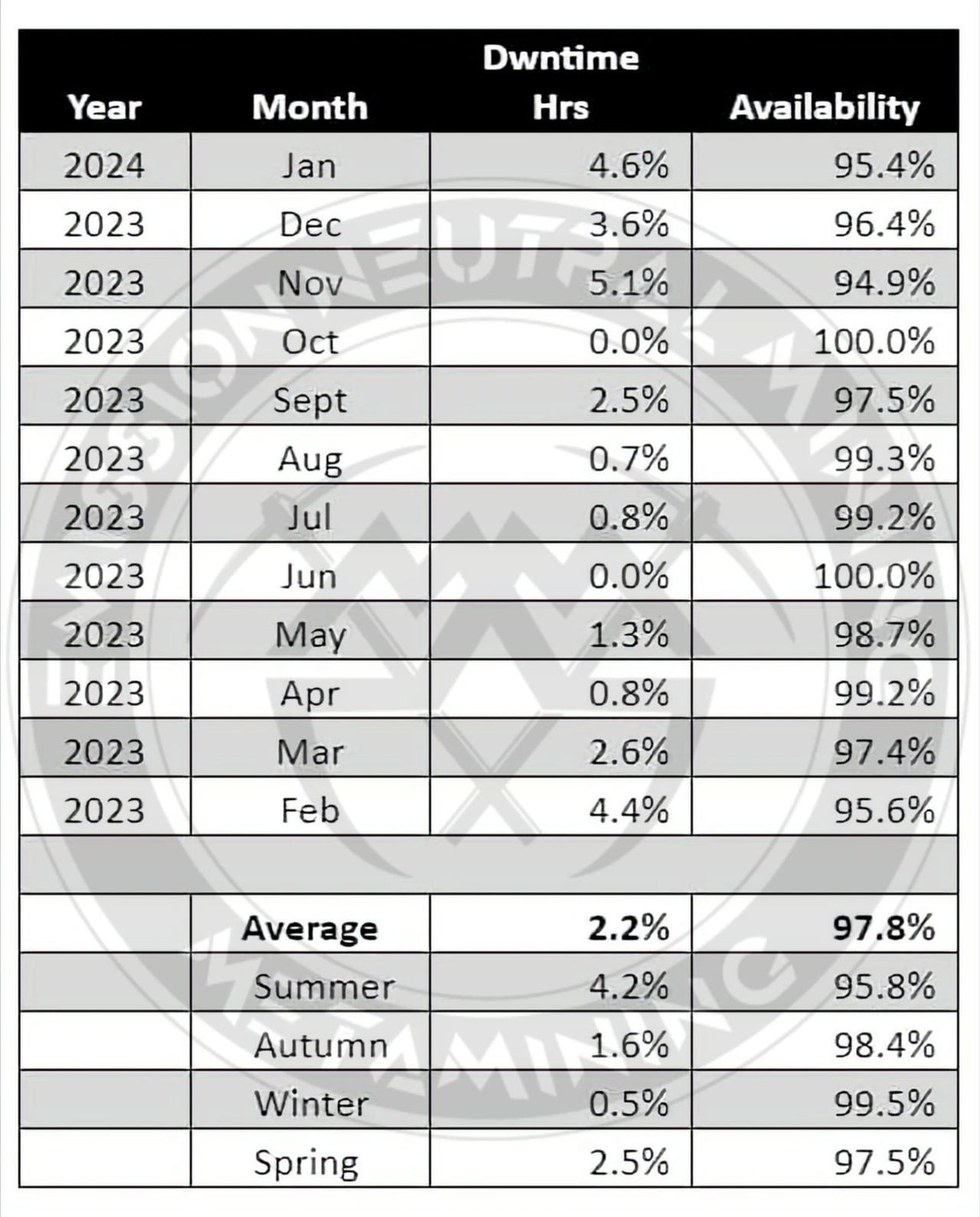
The outlook ahead for crypto for the remaining half of 2024 looks bright, we all know that the market never moves in a straight line and while we are currently in a market decline (which was to be expected), we are trending in the right direction overall and the signs look good for a market rally and Bull Run in 2025. There is still quite a way to go on this cycle and we are just inside the BTC halving. Right now the time is perfect to expand your BTC mining and likewise your Scrypt mining and CKB mining is also ideally poised to reap some great rewards and maximise the benefit from your mining units for the halving cycles and coin production. We have been seeing some of our customers doing just that. Machine prices are favorable right now, we are sure to see them rise along with the market pricing over the next 12-15 months. Now is a great time to set up your mining, expand your hashrates and set yourself for the next 3.5 years of the current mining rewards on some key projects and coins. Your machine purchases now are also a great offset against your crypto gains in this new financial year.
The market as a whole has some great prospects for growth and further news of ETF approvals will see more inflow of funds entering the crypto space. We are sure to see the overall market cap increase and with that the values of your crypto holdings. I trust you have all had a great year to date and a great last financial year. I hope that the recent Tax blog proved useful for you and hope that your tax time accounting is hassle free. There are some exciting times ahead for us as we prepare for the next phase of this crypto cycle.
Happy Mining
Rusty Rigs
Disclaimer: The content on this site and in this communication should not be considered investment or financial advice. Any investing or crypto mining is speculative. When investing your capital is at risk, please do your own research and invest and make your decisions wisely. Mining profits are not guaranteed and may vary over time depending on the market performance and network hashrates.